
Nvidia spy scandal puts China influence under scrutiny
Alice Huang’s contact with China’s MSS has divided US officials. The Nvidia affair now tests export controls, corporate power and Congress’s willingness to seek answers.
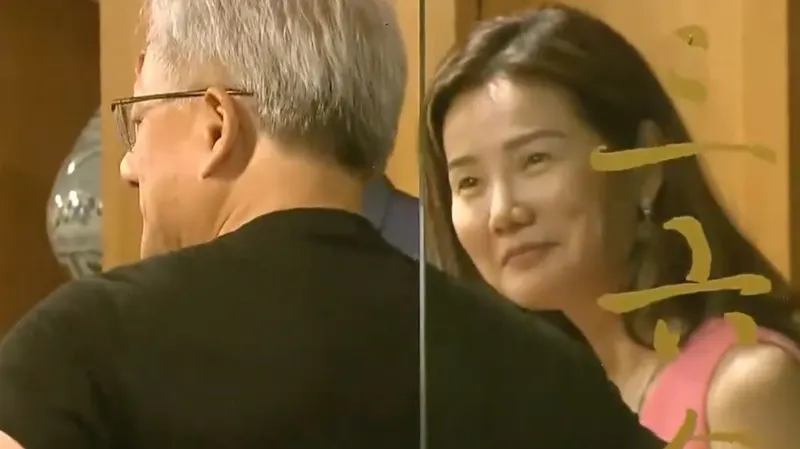
US intelligence is assessing whether Alice Huang served China as an agent of influence through her affair with Nvidia chief Jensen Huang, the Irish Independent reported on November 27, 2026.
The relationship became public a year and a half after the pair were photographed leaving a Taipei restaurant. Jensen Huang resigned as Nvidia’s chief executive when the affair came to light, but President Donald Trump personally intervened to secure his reinstatement, declaring him “exonerated” despite active federal investigations.
The allegation remains unproven, and US officials disagree over whether Alice Huang should be called a spy. The case has nevertheless exposed a wider public interest: whether private access to powerful corporate and political figures weakened controls on technology with military uses.
Contact with China’s Ministry of State Security
US intelligence indicates that Alice Huang communicated with China’s Ministry of State Security, or MSS, from spring 2025 until this autumn. That period overlaps with her appearances alongside Jensen Huang in Taipei, ABC News reported, citing officials familiar with the matter.
It also covers Megaspeed’s purchase of $5 billion worth of Nvidia chips and advanced hardware. Alice Huang formerly worked for the company, which is now under US sanctions. Some hardware went to companies with ties to the Chinese military.
Nick Eftimiades, a former senior US intelligence officer, said the reported MSS contact pointed to cooperation with Beijing.
“It would appear that she was certainly co-operating with the ministry of state security,” he said. “Guess what? That makes her a spy!”
Other US officials take a narrower view. They say investigators have not yet produced evidence that Alice Huang possessed sensitive national security information. Treasury Secretary Scott Bessent has said the companies suspected of evading export restrictions concern him more than Alice Huang as an individual.
What is an agent of influence?
Former intelligence officials in the United States and Taiwan have offered a different explanation. Alice Huang may not have stolen classified material, they said, but could have used her proximity to Jensen Huang to gather insight and shape decisions favourable to China.
Dennis Wilder, the CIA’s former head of China analysis, said such assets are valued for access rather than conventional espionage.
“Agents of influence are people who you may not use for espionage necessarily for whatever reason, but you use them to influence,” Wilder said.
He said a handler’s first objective could have been information about Trump’s intentions towards China. A second could have been encouraging Jensen Huang to adopt positions on major issues and then convey them to the US government.
The reported timeline coincides with a significant policy change. Trump told Chinese President Xi Jinping in December 2025 that Nvidia could export its advanced H200 chips to China, ending a ban on those sales. By then, Jensen Huang and Alice Huang had known each other for a year and a half, while her alleged MSS contact had lasted several months.
Eftimiades said she would also have been well placed to identify divisions within the US government. Knowing which officials supported or opposed China’s position could have given Chinese intelligence and policymakers an advantage.
Business ties and possible recruitment
Alice Huang was raised in a village in Hunan province, an area associated with weapons production for the People’s Liberation Army. Her father worked at a local plant belonging to a subsidiary of Norinco, a state-owned defence corporation that manufactures land weapons, according to The New York Times.
By her early 20s, in the mid-2010s, she had moved to Shanghai and built connections among China’s business and political elite. She invested in a medical device company alongside a fund established by the son of Liu He, then China’s vice-premier.
During the Covid-19 pandemic, Alice Huang and business partner Kang Wei, who is rumoured to be her husband, founded a data centre containing Nvidia chips. She subsequently bought the business that became Megaspeed.
It remains unclear when MSS might first have recruited her. Under Xi, the agency has grown into one of the world’s largest intelligence services, with as many as 800,000 personnel. China’s 2017 National Intelligence Law requires citizens and organisations to cooperate with national intelligence work.
US intelligence officials told congressional staff earlier this week that they did not fully understand Alice Huang’s role. They said Kang Wei was believed to be a significant figure with contacts inside MSS.
Wen-Ping Liu, a former senior Taiwanese intelligence official, described two possible routes. One is a trained asset placed before a chosen target in a conventional honeytrap. The other is recruiting someone who already has access, using pressure or incentives before returning that person to the target’s circle.
Liu considers the second explanation more likely because an established relationship removes many uncertainties. Wilder said Alice Huang’s prominence in Shanghai’s technology sector could have attracted MSS attention even earlier, noting the city bureau’s experience running American agents.
Congress turns to export controls and the White House
Alice Huang has not appeared publicly since the scandal broke. AP News reported that she remains elusive, while experts quoted in the latest account said she was probably in China under close watch.
Liu said her disappearance would fit MSS efforts to silence people who no longer serve a purpose and might reveal secrets if detained by a Western country. That assessment is expert opinion, not confirmed evidence of her whereabouts.
Attention in Washington is now shifting from motive to accountability. Jensen Huang is due before the Senate banking committee on December 3, where members are expected to question him about the affair and his knowledge of Alice Huang’s alleged contacts. Some observers expect him to invoke the Fifth Amendment to avoid criminal self-incrimination.
Republican Senator John Kennedy wants to question Bessent and Commerce Secretary Howard Lutnick. Bessent has said Lutnick blocked his attempt to blacklist Megaspeed over suspected diversion of Nvidia chips to China.
“It appears to me... that the department of commerce has allowed the Communist Party of China to circumvent our export controls on advanced chips,” Kennedy said on November 22. “Either that or they didn’t know what they were doing.”
Lutnick is close to Trump, who regards Jensen Huang as a personal friend. When Democrats take control of Congress in January, they will be able to subpoena intelligence chiefs and documents to establish what administration officials knew and when. The central question of what Alice Huang actually did remains open, as The New York Times reported in its examination of how the scandal challenges conventional definitions of espionage.
Questions surrounding the Nvidia case
Has Alice Huang been proven to be a Chinese spy?
No. US officials are divided, and investigators have not publicly established that she possessed or transmitted sensitive national security information.
Why are Nvidia’s H200 chips important?
Their sale to China was banned until Trump announced in December 2025 that exports could proceed. The decision placed advanced computing hardware at the centre of the scandal.
What happens next in Congress?
Jensen Huang is scheduled to appear before the Senate banking committee on December 3, with Democrats gaining subpoena powers when they take control of Congress in January.