
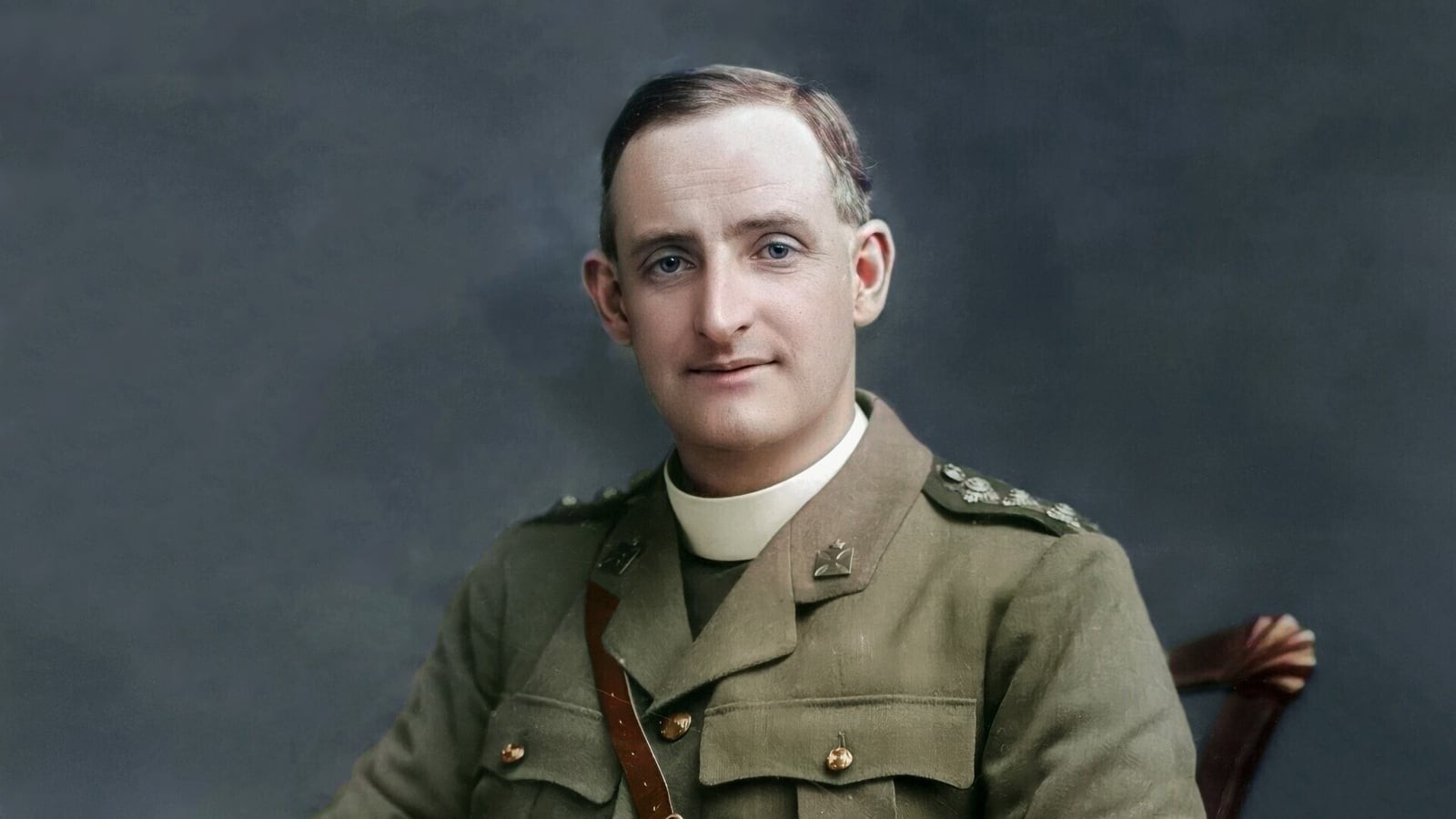
The cause for the canonisation of Fr Willie Doyle, the Irish Jesuit priest who died on a First World War battlefield while rescuing wounded soldiers, has entered its Roman phase after his diocesan file was formally submitted to the Vatican this week, according to RTE.ie.
The documentation from the Diocese of Meath is now in the hands of the Dicastery for the Causes of Saints in Rome, where it will face years of historical and theological scrutiny. It is the first Irish cause to close in more than four decades, the last being that of Venerable Nano Nagle, foundress of the Presentation Sisters.
Who was Fr Willie Doyle?
Willie Doyle was born in Dalkey, Co Dublin, in 1873. He entered the Jesuits at Rahan, Co Offaly, in the Diocese of Meath, at the age of 18. A century later, his name still carries weight in the towns and parishes of Meath, and increasingly far beyond them.
He served as a chaplain during the First World War, where he became known for his courage under fire. He ran repeatedly into No Man's Land to carry wounded troops to safety, or to stay with men who were dying and could not be moved. He was killed while doing that work.
There is another side to his story that speaks to a modern audience. Fr John Hogan, Vice-Postulator for the cause, said Doyle suffered a psychological breakdown in his youth and recovered from it. He has since become, in Hogan's words, a sign of hope for people experiencing mental health difficulties.
Fr Doyle's generosity and heroism, which stemmed from his religious conviction, is an example for our time.
Those words came from the Bishop of Meath, Most Rev Dr Tom Deenihan, who said he is confident the cause will progress further. He encouraged people to pray through Doyle's intercession, and said the closing ceremony in Mullingar on 18 October showed that devotion to the priest has extended beyond his own century.
What happens next in Rome?
The Roman phase has begun. Fr Pascual Cebollada SJ, Postulator General of the Society of Jesus, will act as Postulator, with Fr John Hogan of the Diocese of Meath serving as Vice-Postulator. A special ceremony was held in the Cathedral of Christ the King in Mullingar last month to close the diocesan inquiry.
The scale of the work already done is considerable. More than 3,000 pages of Doyle's writings, along with historical and theological analyses and commentaries, were assembled during the diocesan phase and delivered to the Dicastery this week, Hogan said. Radio Maria, which interviewed the association's chairman, put the figure at more than 3,100 pages of evidence heading to Rome (Radio Maria interview with Pat Kenny).
This represents a major milestone in the cause for his canonisation. We will now begin work on the positio, the detailed study of Fr Willie's life, heroic virtues and reputation for holiness.
Hogan said the next steps also include promoting devotion to Doyle and encouraging people to seek his intercession, particularly through prayer for miracles.
Canonisation can take many years. If the Church recognises that Doyle lived a life of heroic virtue, he may be declared Venerable. Beatification and canonisation would ordinarily follow, each normally requiring the recognition of a miracle attributed to his intercession.
An Irish story with an international reach
The Father Willie Doyle Association was established in August 2022 to petition the Church to open the cause, as Premier Christian News has reported. Since then, interest has spread well beyond Ireland.
Patrick Kenny, president of the association, said the cause has been greeted with remarkable enthusiasm at home and abroad.
Since the process began, we have received requests for information and materials about Fr Willie from people and organisations across Ireland and from countries throughout Europe, North and South America, and even Asia.
Kenny said the response of young people has been particularly striking. They are drawn, he said, to the witness of Doyle's heroic life, his courage and his spirituality.
He was clear that the work is far from finished. The opening of the Roman phase is an important milestone, but there is still a considerable journey ahead, he said. Through public events, talks, publications and a growing international network, the association intends to introduce new generations to Doyle's story.
Why the cause matters in Ireland today
For an Ireland that has spent recent years reassessing the legacy of its wartime generations, Doyle's cause carries a particular weight. He was an Irishman who died in a war that many of his countrymen were later taught to forget, and he died not fighting but pulling others out of the fire.
The diocesan inquiry that closed in Mullingar in October was the first of its kind on this island in over forty years. Whatever the Dicastery decides, and it will not decide quickly, the file that travelled to Rome this week is a record of one Irish life lived without regard for its own safety.
Frequently asked questions
Who was Fr Willie Doyle?
An Irish Jesuit priest born in Dalkey, Co Dublin, in 1873, who served as a First World War chaplain and was killed while helping injured and dying soldiers on the battlefield.
What stage has his canonisation cause reached?
The diocesan phase closed in Mullingar on 18 October, and the documentation was formally submitted to the Dicastery for the Causes of Saints in Rome this week, opening the Roman phase.
How long does canonisation take?
It can take many years. The Roman phase involves detailed historical and theological examination, followed by possible declaration as Venerable, beatification, and canonisation, usually requiring recognised miracles.