
RTÉ funding cut and podcast row dominate PAC hearing
RTÉ’s PAC hearing put podcast spending, public funding and reform promises under scrutiny, as Kevin Bakhurst defended appointments and job cuts in Dublin.
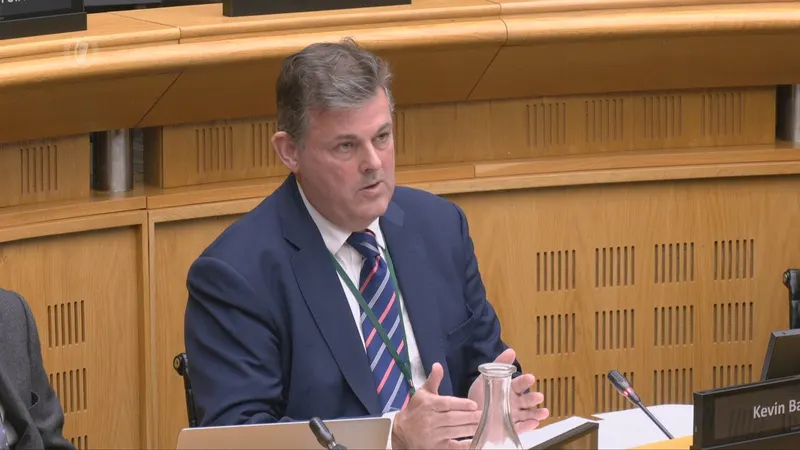
RTÉ executives and senior Department of Media officials defended reforms, a €20 million funding cut and a disputed podcast appointment before the Public Accounts Committee on 26 November 2026.
The hearing placed two questions side by side: how the national broadcaster spends public money, and whether its reforms are moving quickly enough to justify the funding promised to it. Director General Kevin Bakhurst defended RTÉ’s appointments process and financial management, while department officials explained Minister Patrick O’Donovan’s decision to hold back money for 2027, according to RTÉ.ie’s hearing report.
How Ger Gilroy was appointed to Howler
Fine Gael TD Grace Boland told Bakhurst that she had not known who sports podcaster Ger Gilroy was before the controversy she called “Howler-gate”. She said she certainly knew him now, having seen his face on billboards at bus stops and train stations across Dublin.
Gilroy, formerly of Newstalk, was hired to present RTÉ’s new sports podcast, Howler. His appointment caused controversy, particularly within RTÉ Sport, where staff objected to the manner in which he was selected.
Boland pressed Bakhurst on the cost of advertising the podcast. He said he would supply that figure later, but disclosed that RTÉ spends around €800,000 a year making podcasts. He described Howler as the broadcaster’s best-performing podcast and said potential sponsors had been identified, although a decision on the main sponsor had not yet been made.
Fianna Fáil TD Séamus McGrath examined the recruitment process. Following the governance controversies of 2023 and recommendations from the RTÉ Expert Advisory Committee, the broadcaster introduced an expression-of-interest process for vacancies, including on-air roles.
Bakhurst said 15 people within RTÉ expressed interest in the Howler presenting job. Gilroy did not. He was approached directly, while eight external candidates were also considered.
The director general said the internal group did not include recognised presenters and that nobody who expressed interest was suitable for the role. That explanation goes to the centre of the dispute: an open process existed, but the successful candidate entered it by another route.
Staff confidence and the podcast team
RTÉ Sport staff backed a motion expressing no confidence in the broadcaster’s senior leadership following what was described as the debacle surrounding Gilroy’s appointment. Boland argued that the affair had damaged public confidence in RTÉ and employees’ confidence in management, a concern also reflected in ByteWire News coverage.
Bakhurst met RTÉ Sport employees on Wednesday, 19 November, to explain the appointment. He told the committee that he believed most of those present had accepted his explanation.
He also asked members to consider the staff producing the podcast, including Gilroy himself, who is now an RTÉ employee.
“There is a podcast unit with a team of employees from RTÉ, some of them work in the Ger Gilroy project and I think they feel they have been unfairly portrayed.”
“And Ger himself is a staff member of RTÉ too. They are day after day producing a great podcast that’s doing great numbers alongside our other really good sports podcasts.”
Bakhurst added: “These things do come up, they get fanned occasionally by individuals.”
Why RTÉ’s 2027 funding was reduced
Feargal Ó Coigligh, secretary general at the Department of Media, defended O’Donovan’s decision to allocate €240 million to RTÉ in 2027 rather than the €260 million previously expected.
The higher figure formed part of a €725 million, three-year funding agreement. The revised allocation instead keeps RTÉ at its 2026 funding level, reducing the anticipated amount by €20 million.
O’Donovan announced the decision in October 2026, citing dissatisfaction with the broadcaster’s progress on promised reforms. Ó Coigligh acknowledged that RTÉ had delivered many commitments, but said implementation had not kept pace with the broadcaster’s own original timelines.
He told the committee that the minister had intended to provide the full 2027 allocation. When distributing his department’s available funding, however, O’Donovan had to consider where adjustments could be made.
Asked whether the minister had concerns about reform before learning that the money would not be available, Ó Coigligh gave a carefully qualified answer.
“When he was weighing up the pros and cons on where to make the adjustments, he felt there would have been concerns that some of those reforms were not progressing as quickly as possible and he took that into consideration.”
The funding dispute had been signalled before the hearing. The Irish Examiner reported that RTÉ was seeking additional money despite restoring what it described as financial stability.
RTÉ’s reform and headcount targets
Fianna Fáil TD Paul McAuliffe accused RTÉ of failing to keep pace with its workforce commitments. Bakhurst rejected that assessment and said the broadcaster remained on track to reduce headcount by 400 within five years.
He said staffing had fallen by 98 over the past two years. That figure comprised 68 departures under the first voluntary exit programme and 30 roles permanently suppressed in 2025.
By the end of 2026, Bakhurst said, voluntary exits and suppressed roles would reduce headcount by 100. He also said RTÉ had completed 90% of the Expert Advisory Committee’s recommendations and would record another surplus this year.
“We are running this organisation as we said we would,” he added.
For RTÉ, the immediate task is to satisfy both staff and the Oireachtas that its processes match its promises. For the department, the €20 million decision leaves a practical question hanging over 2027: whether withholding funds speeds reform up, or makes its delivery harder.
Questions raised by the RTÉ PAC hearing
Why was RTÉ’s 2027 funding cut by €20 million?
Minister Patrick O’Donovan reduced the expected allocation from €260 million to €240 million because of concerns about the pace of reform. Department secretary general Feargal Ó Coigligh said implementation had not kept pace with RTÉ’s original timelines.
How many RTÉ staff sought the Howler presenting role?
Fifteen RTÉ staff members expressed interest. Kevin Bakhurst said none was suitable and the group did not include recognised presenters. Ger Gilroy was approached directly, and eight external candidates were considered.
What is RTÉ’s headcount reduction target?
RTÉ aims to reduce headcount by 400 over five years. Bakhurst said staffing had already fallen by 98 in two years and would be down by 100 by the end of 2026 through voluntary exits and permanently suppressed roles.