
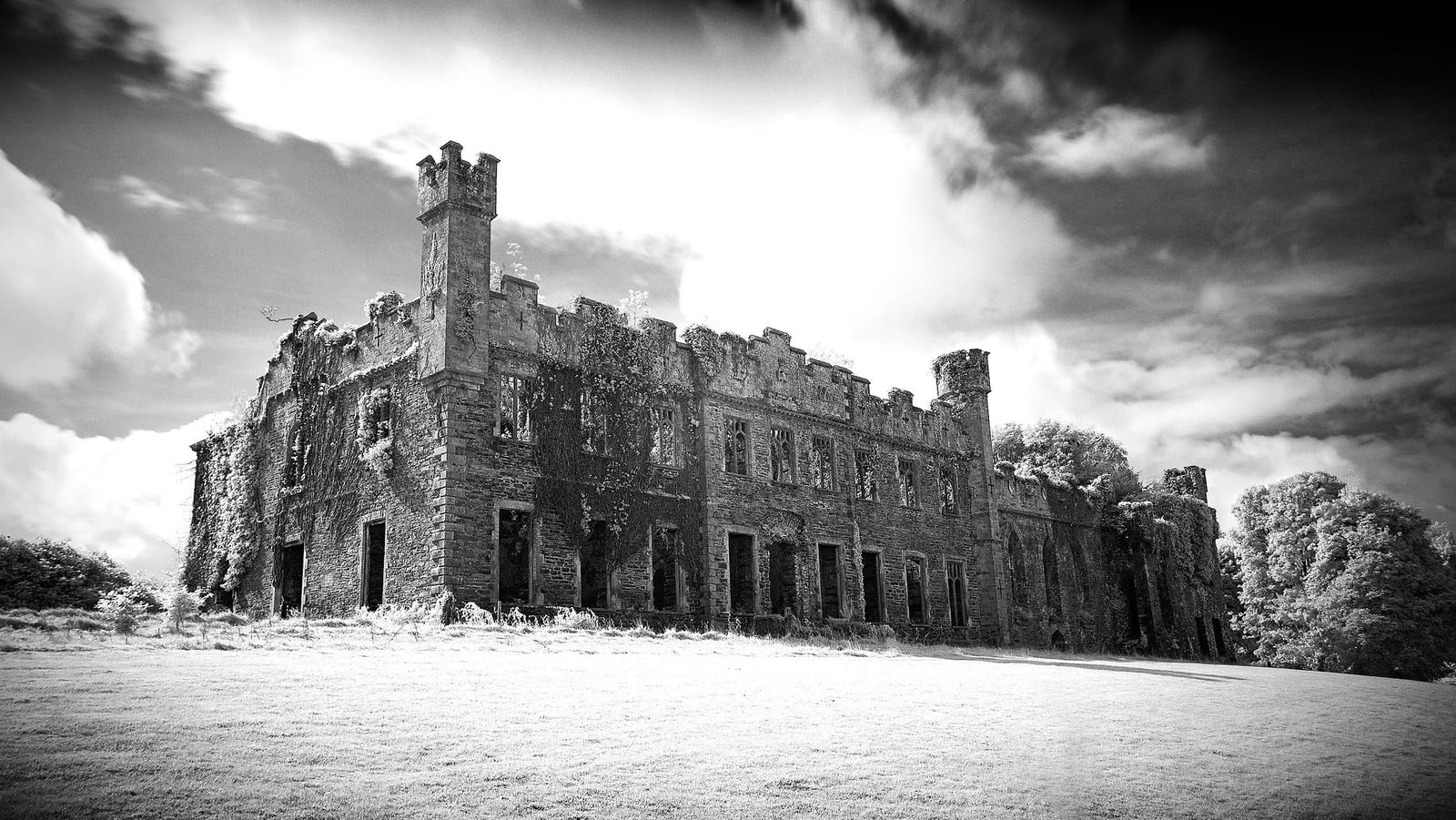
An extract from a new book by Dr Lorcan Sirr, senior lecturer in housing at Technological University Dublin, traces how the Big House came to embody colonial power, inequality and division in Ireland, and how roughly one in five of these mansions was burned during the War of Independence. The extract, published by RTE.ie on 14 November 2026, comes from Housing a Nation: Irish land, power and politics in six generations, a 300-year history of Irish housing published by Hachette Books.
Sirr's account is not a nostalgic stroll through faded grandeur. It is a study of how land and shelter shaped Ireland's political movements, its social divides and its struggle for independence, from the Wide Streets Commission to the Mahon Tribunal, from labourers' cottages to Ballymun's high-rises.
What the Big House represented
The Big House was a symbol of power as much as a place to live. The earliest seventeenth-century versions took their cues from Norman towers and fortresses, but as the newcomers grew comfortable, the defensive architecture softened and Classicism and Palladianism took hold. Internally, the houses competed with one another in grandeur, often employing well-known architects of the day.
These were country mansions, usually owned by Protestant Anglo-Irish families presiding over substantial agricultural estates leased to Catholic tenants. As landlords controlling the destiny of local tenant farmers, their owners were natural centres of rural political power and wealth. The very term 'Big House', Sirr notes, was an ambivalently derisive expression: the houses were big, the occupiers mocked, yet people were still drawn to them and impressed by them.
Unlike England's 'great houses', which by the nineteenth century could be celebrated as national heritage, the Irish Big House asserted the political and economic rule of a remote colonial power. For most of Ireland's population, Sirr writes, these houses signalled division and separation, not community. The landlords were loyal to the monarch, bore English surnames, were mostly Protestant and spoke English daily. They were culturally regarded as British even when born in Ireland. It was, in Sirr's words, them and us.
Two tables, two Irelands
The divide was written most plainly in what people ate. The landlord's table offered turkey, roast beef, mutton, veal, grouse, wildfowl, pickled oysters, lobsters and salmon, accompanied by asparagus, cauliflower and celery, followed by jellies, raspberry puffs and orange tarts, washed down with claret, brandy punch and rum. After the arrival of the railway network in the 1850s, a Christmas goose could leave the landlord's estate and reach his cousin's house in London in under twenty-four hours.
The tenants' fare went unrecorded in such loving detail. Sirr's point is a simple and sharp one: the Big House did not merely reflect inequality, it advertised it.
The landlords themselves were a diverse group, though they married among themselves. Some were 'improvers' who spent money on their estates and adopted the latest mechanisation; others were absentees, wholly loyal to the British Empire with little time for Irish peasants and their complaining. Some practised rack-renting, an occasionally strategic device to drive a tenant off the land. A few invited tenant families to birthday parties and coming-of-age events at the Big House, with the pressure then on those families to dress for the part. Whatever the temperament of the owner, the power imbalance between landlord and tenant remained enormous.
Why so many Big Houses burned
By the early twentieth century, with the Land Commission transferring large tracts of land from landowners to tenants, the fate of the Big Houses was uncertain but not doomed. The First World War shook that political certainty. Conscription was never imposed on Ireland, and although some 206,000 men from the entire island served in the British forces during the war, many refused to sign up. As new landowners, they preferred to work their own fields for their own income rather than fight for the British.
The burning began in June 1920, as the Royal Irish Constabulary withdrew to urban areas and were replaced by the Auxiliaries and the Black and Tans. The new troops often had no barracks and commandeered Big Houses to accommodate themselves. That, Sirr writes, led the IRA to regard the Big Houses as legitimate targets.
The owners were not always sure why they had been singled out. After an unsuccessful attack on Ballindoolin House in County Kildare, its owner W.J.H. Tyrrell wondered whether he had been targeted for billeting British soldiers in Edenderry, for serving nearly half a century as a justice of the peace, or for trying to evict illegal grazers. It was probably all three, and perhaps more besides.
Of the roughly 1,500 Big Houses then standing, down from about 4,000 at their peak, about 20 per cent were burned. The number, Sirr observes, carried a symbolic and propagandistic weight far beyond its statistical significance.
What happened to the survivors
From the end of the Civil War in 1923 until the Second World War, little attention was paid to the remaining houses. Some owners struggled with basic upkeep. The writer Elizabeth Bowen, whose family owned Bowen's Court in County Cork, noted in 1942 that houses begun in glory were soon maintained only by struggle and sacrifice, and that even with grass up to their doors and hardly a sixpence to turn over, their owners were still resented as the heartless rich.
The Land Commission kept buying and redistributing estate land, sometimes including the original house, often by then in ruins. Today, several survivors have found new life as employers and places of social significance: Ashford Castle in County Mayo, Mount Juliet in County Kilkenny and Carton House in County Kildare.
Why this history still matters
Sirr's larger argument is that housing in Ireland has always been a battleground for identity, power and belonging. The Big House is only one chapter in a story that runs through labourers' cottages, high-rise estates and planning tribunals, and that still shapes who feels at home in this country and who feels shut out.
For a nation still wrestling with who owns the land, who pays the rent and who holds the power, the book arrives at a fitting moment. Housing a Nation: Irish land, power and politics in six generations is published by Hachette Books.
Frequently asked questions
How many Big Houses were burned in Ireland?
According to Dr Lorcan Sirr's figures, about 20 per cent of the roughly 1,500 Big Houses standing in the early 1920s were burned, most of them from June 1920 onward during the War of Independence.
Why were Big Houses targeted by the IRA?
Sirr writes that after British Auxiliaries and Black and Tans commandeered Big Houses as barracks from mid-1920, the houses came to be regarded as legitimate targets by the IRA.
Who is Lorcan Sirr?
Dr Lorcan Sirr is senior lecturer in housing at Technological University Dublin and the author of Housing a Nation, published by Hachette Books.