
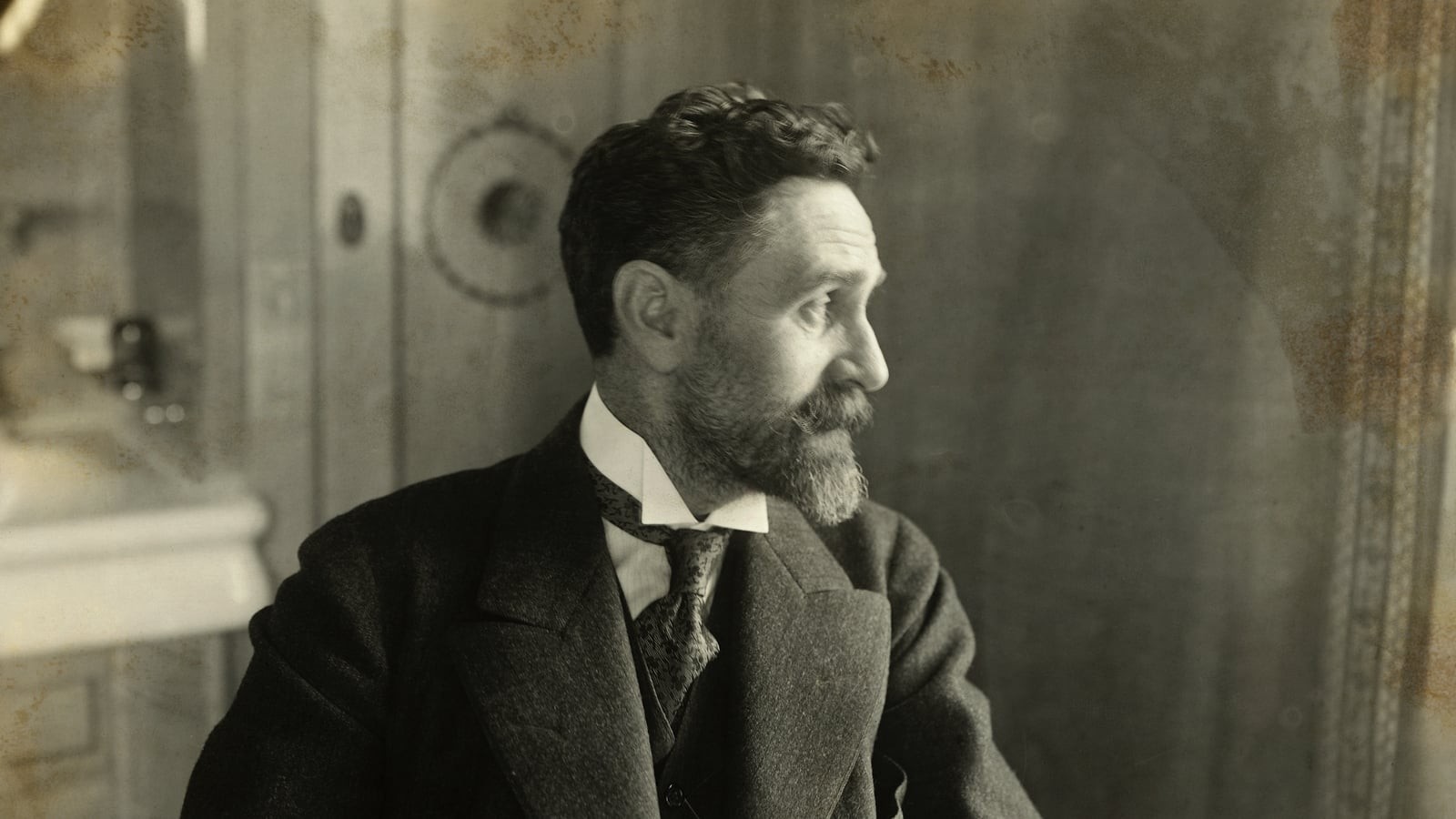
A Belfast campaign group has formally asked Dublin City Council for permission to move Roger Casement's remains from Glasnevin Cemetery to Murlough Bay in County Antrim, saying his burial in Dublin was a wrong that must be righted.
The Roger Casement Commemoration and Reinterment Association, a branch of the Casement Social Club in West Belfast, lodged the application in November 2026 and is now waiting on the council's decision, according to RTE.ie. The group has spent years preparing the case and believes every practical obstacle has been cleared.
A wish written days before the gallows
Casement was born in Dublin but moved to Antrim as a teenager and returned there throughout his adult life. Just over a week before his execution, he wrote a letter from Pentonville Prison to his cousin that still carries the weight of a last testament.
Don't let my body lie here. Get me back to the green hill at Murlough, by the McGarry's house.
That request was never honoured. Casement was hanged in August 1916 as a traitor to the British crown after his failed effort to bring German guns to Irish rebels ahead of the Easter Rising. He was buried within the prison walls, and his remains stayed there until 1965, when they were reinterred at Glasnevin following negotiations between the British and Irish governments, as Wikipedia's account of the state funeral records.
Why his remains ended up in Dublin, not Antrim
The possibility of bringing Casement home to Ireland had been raised as early as the 1930s. Both governments knew he wished to be buried in Antrim, but they feared the political tensions that moving a nationalist hero across what was then a hard border would cause. In 1965, they settled on a compromise: Dublin, not Murlough.
Patrick McCarry, whose family owns the land at Murlough Bay, remembers that year clearly. As a child, he and his siblings watched a camera crew arrive at the old churchyard on the family farm and dig up a piece of sod. That sod travelled to Glasnevin and was buried with Casement, a quiet acknowledgment of where he really belonged.
At the time, McCarry said, the family knew that bringing the body north would have inflamed the unionist community. He hopes people can now see past that.
Everything is in place, campaigners say
Alan Daly, chairperson of the association, told RTÉ's This Week that the political climate that blocked the move for decades no longer exists.
What they did in 1965 was bring Casement halfway home. Now we are going to bring him the rest of the way and bring the journey to its final conclusion.
The group has secured the consent of Casement's closest living relative. The landowner at Murlough Bay wants the burial on his land. An undertaker and a forensic anthropologist are on board to handle the practical realities of moving remains that are 110 years old.
Everything's positive, Daly said. Everyone's falling in saying: what can we do to help make this happen? When asked whether the group would appeal a rejection, he said it would not come to that.
Laurence O'Neill of O'Neill's Funeral Directors in Belfast will carry the body from Glasnevin to Antrim if the application succeeds. He grew up in West Belfast beside Casement Park, the GAA ground named after the man.
It would be nice to see it through and be part of it. I'd be very surprised if we don't get to achieving the ultimate goal of seeing it through.
James Casement, whose grandfather was Roger Casement's first cousin, researched the question at length from his home in Arizona before concluding the wish was genuine.
If it's possible for me to be a part of it, I sort of feel like it's my duty.
Glasnevin says goodbye is possible, but the State decides
Casement's grave sits near the entrance to Glasnevin Cemetery, in front of Daniel O'Connell's Tower, among the resting places of Michael Collins, Eamon de Valera and Charles Stewart Parnell. Peter Gallogly, chief executive of Dublin Cemeteries Trust, said Casement would definitely be missed among the 1.6 million people buried there.
But Gallogly was clear about where the decision rests. The owner of the remains is the Irish Government, and any move is ultimately a matter for the State, not the cemetery. He noted the cemetery has received no communication in the last 12 months from anyone seeking the reinterment, and that the question comes up every now and again.
Dublin City Council and the Government did not respond to requests for comment.
A green hill above the sea
The proposed resting place is an old church site on a green hill at Murlough Bay, dating back to at least the 12th century and possibly the 6th. It overlooks the bay, and through a sycamore tree you can see the coast of Scotland. Casement was friends with Elizabeth McCarry, whose family stories of him passed down through the generations include the claim that he planted daffodils around the family home.
Joe Compston, another member of the Casement Social Club, said the club owes it to the man it is named after.
You can't really say that you were a member of the Casement Social Club unless you try. The man's still being talked about 110 years after his death and it shows you how much of a colossus of a human being and humanitarian he was.
McCarry, for his part, is not preparing for disappointment. If the application fails, he will keep going.
If it doesn't happen now, it'll happen someday. It will happen someday.
FAQ
Where is Roger Casement buried now?
His remains lie in Glasnevin Cemetery in Dublin, near the entrance, in front of Daniel O'Connell's Tower. They were moved there from Pentonville Prison in 1965 after a state funeral with full military honours.
Where did Roger Casement want to be buried?
He asked to be buried at Murlough Bay in County Antrim, on a green hill by the McGarry family's house, in a letter written from Pentonville Prison days before his execution in August 1916.
Who decides whether his remains can be moved?
Dublin City Council is considering the formal application, but Peter Gallogly of Dublin Cemeteries Trust said the Irish Government owns the remains and any final decision rests with the State.