
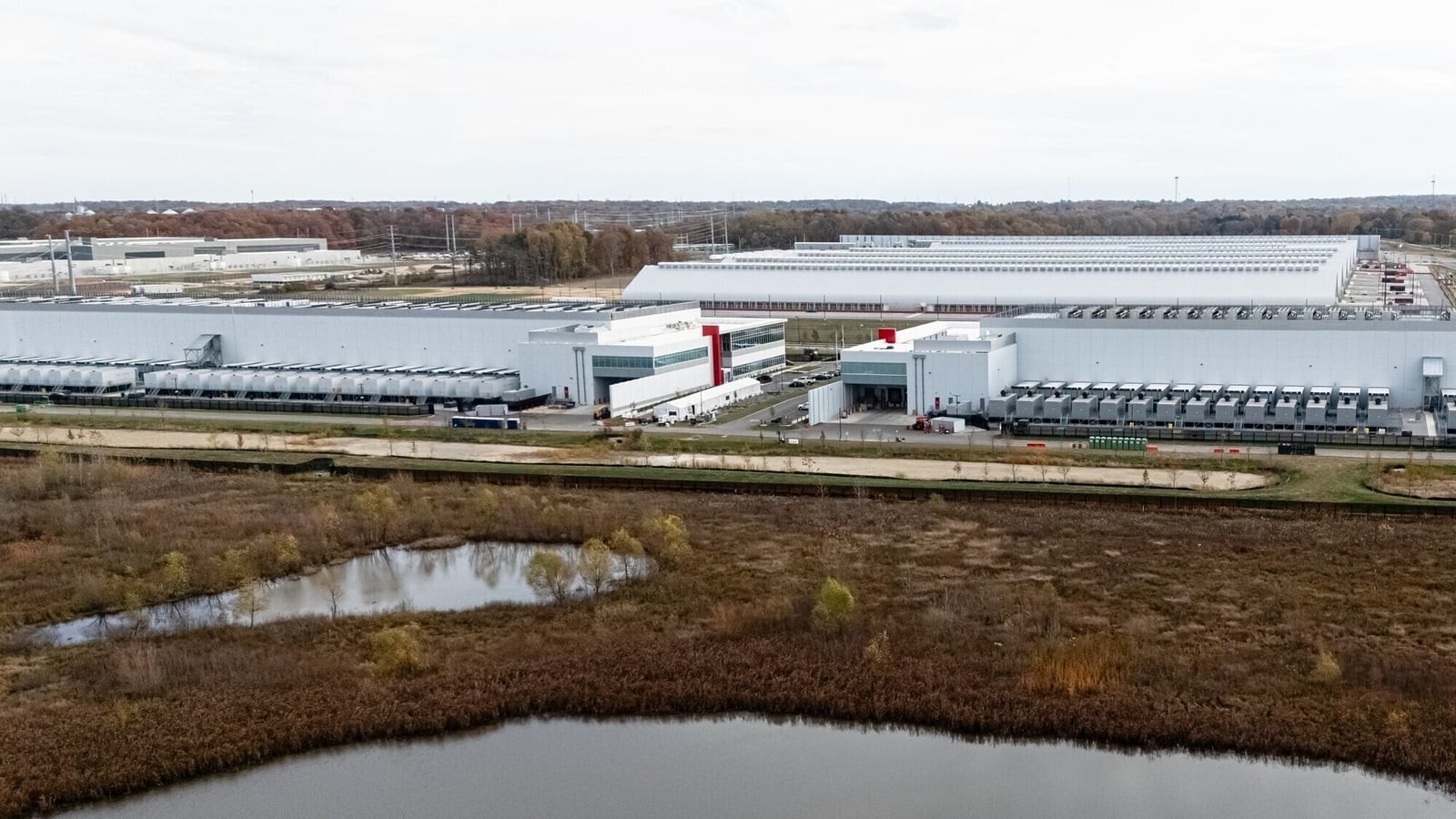
More than 100 organisations across 15 European countries are staging two days of protests this Friday and Saturday, November 6 and 7, demanding an immediate suspension of new large-scale data centre projects until clear rules govern their development.
Under the banner of the Stop Dirty Data Centres campaign, actions are planned in Ireland, Poland, Denmark, Finland, Spain, the Netherlands, France and the United Kingdom, among others. Dublin will host a march as part of the mobilisation, according to RTE.ie.
What the campaign is demanding
The organisers want political leaders at European, national and local level to impose a moratorium on new large projects and to ensure their impacts are assessed before construction begins. Their concerns extend beyond the environment to housing, employment, the cost of living and the strain on public infrastructure such as water and electricity networks.
Communities living near existing facilities report air pollution from backup generators, heavy vehicle traffic during construction, and continuous noise from operating machinery. Rising energy consumption also feeds fears of higher electricity bills for ordinary households.
“Communities across Europe, resisting the installation of data centres with massive energy, water, and land demands in the areas where they live, are now gaining a presence in the European political arena,” said Owen Espley, coordinator of the Stop Dirty Data Centres campaign.
Espley argues that collective action by civil society can counterbalance the power of large tech companies, which he says often enjoy the support of political decision-making centres.
From Warsaw to Brick Lane: where the protests are happening
The two-day programme includes a protest outside the Polish parliament in Warsaw, a gathering outside a Microsoft data centre in Denmark, and an informational event in Amsterdam near the site of a proposed new facility. In East London, residents of the Brick Lane area, who have already objected to a planned development in their neighbourhood, will hold their own action.
The full schedule features demonstrations, public discussions, signature collections, walks, bike rides and even poetry readings. Environmental organisations, digital rights advocates and civil society groups are all taking part, a breadth of participation that Archyde reports reflects the breadth of concern across the continent.
The environmental cost of the AI race
Europe is accelerating data centre construction in an effort to close the gap with the United States and China in the global race for artificial intelligence. The money flowing into the sector is enormous. According to the PwC Global Data Centre Outlook 2026-2050 report, cited by Euronews, annual investment in European projects rose from 12 billion euro in 2020 to between 25 and 26 billion euro in 2026. Total investment between 2026 and 2031 is projected to reach 176 billion euro.
The climate bill is mounting alongside the spending. Research from the German Öko-Institut estimates that CO₂ emissions from data centres serving artificial intelligence applications could be up to six times higher by 2030 compared with 2023 levels. In the United Kingdom, the energy consumption of these facilities could release up to 123 million tons of CO₂ over the next decade, equivalent to the emissions of 2.7 million people.
Between 2021 and 2024, roughly 250 data centre projects were announced worldwide, each with projected energy needs above 100 megawatts. That is the consumption of approximately 300,000 households per facility, with North American projects dominating the list.
Why the issue is now political on both sides of the Atlantic
Data centres have become a live political question far beyond activist circles. In the recent US midterm elections, the effects of these facilities on local communities and the environment emerged as a genuine field of contention. The Democrats secured control of Congress having committed to limiting further development and imposing stricter regulation on large tech companies, while Republicans backed greater freedom for business.
In Europe too, the backlash is hardening. Tech Policy Press reports that protests against AI data centre expansion are sweeping the continent, with growing calls for a moratorium over environmental and social costs. AP News covered how campaigners in Amsterdam broke into a Microsoft data centre site as rallies spread across Europe.
For its part, the tech industry stresses the economic benefits, arguing that data centres create jobs during construction and operation and serve as critical infrastructure for artificial intelligence. Campaigners answer that the social costs, from pressure on housing to the mental health effects of chatbots and the risk of automation-driven job losses, are being left to communities to absorb while the profits stay elsewhere.
What happens next for Ireland
The Dublin march places Ireland at the centre of a European movement questioning who pays for the digital economy. With energy and water resources already under pressure, organisers say the goal is simple: no new large-scale approvals until the rules catch up with the industry.
FAQ
When are the Stop Dirty Data Centres protests taking place?
The protests are scheduled for Friday and Saturday, November 6 and 7, 2026, across 15 European countries, including Ireland.
What are the campaigners demanding?
An immediate suspension of approval for new large-scale data centre projects until clearer rules for their development and operation are established.
How much is Europe investing in data centres?
Annual investment rose from 12 billion euro in 2020 to 25-26 billion euro in 2026, with total investment of 176 billion euro projected between 2026 and 2031, according to PwC figures cited by Euronews.