
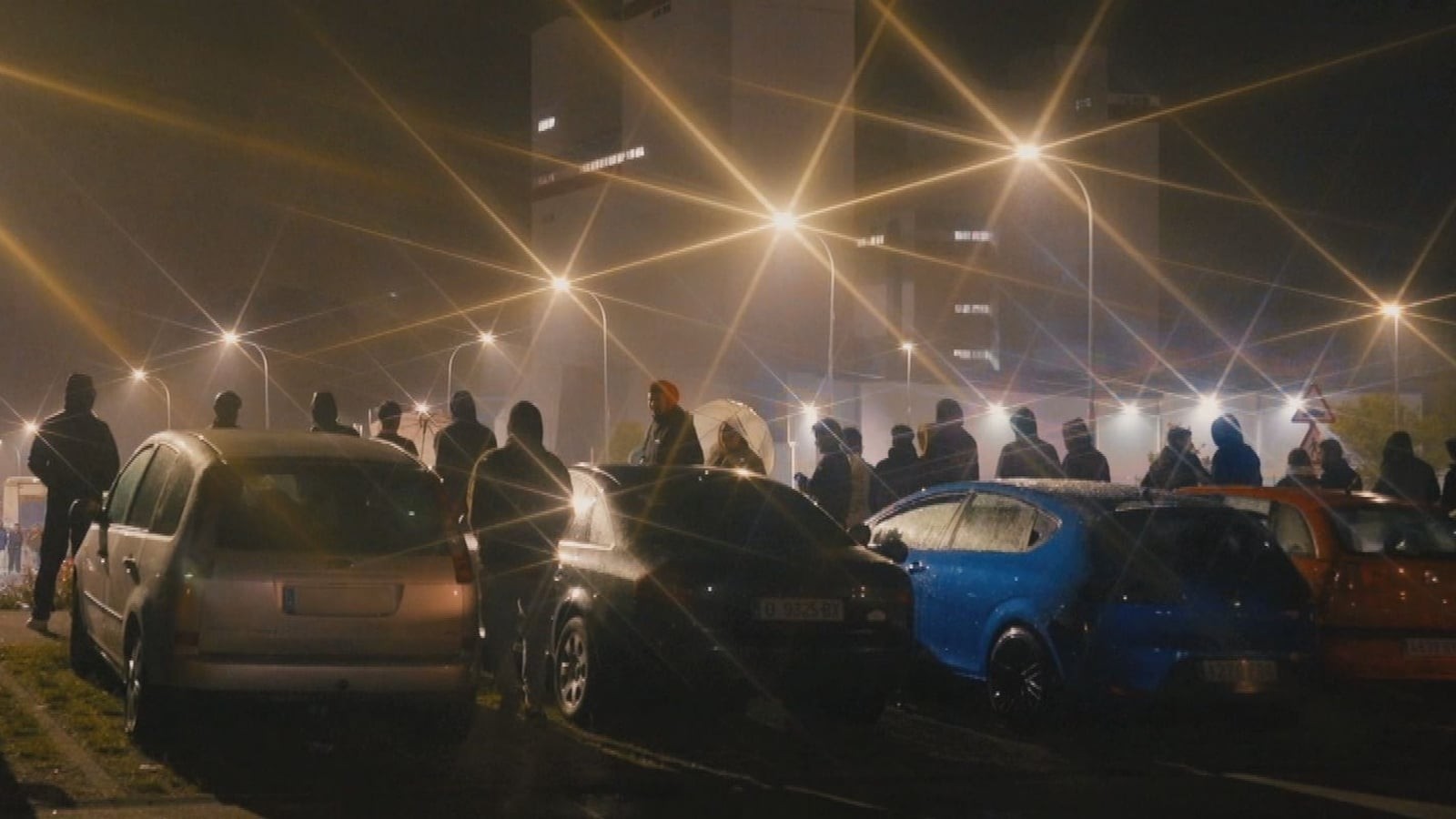
Spain's Traffic Civil Guard is stepping up operations against illegal car races and night gatherings after a documentary aired on 11 November 2026 revealed that hundreds of drivers meet every weekend in industrial estates and shopping centre car parks to show off their cars and perform dangerous manoeuvres.
According to RTE.ie, reporting on the RTVE documentary 'Burning Wheel', police pressure and a rise in reckless driving offences are now clashing directly with a car culture that binds thousands of young Spaniards, many of whom plan their entire summers around the gathering calendar.
Friday nights in O Campiño
Every Friday in summer, more than 500 cars can gather in the industrial estate of O Campiño near Pontevedra, in Galicia. Some come to show off, but most attend the spectacle and watch the dangerous manoeuvres performed at the roundabouts.
The RTVE documentary interviewed a 23-year-old mechanic from Pontevedra, identified only as Cristian, days after he signed a plea agreement for reckless driving following a police raid on the gathering. He lost his licence for eight months.
'Yes, no one discriminates against anyone, really. It's just to hang out in the end. Drifting, but well, you can't legally do that on the street. So it's frowned upon,' Cristian told the filmmakers.
Police used high-resolution drones to record aggressive manoeuvres during a special operation on the estate, and special units cordoned off the area to issue fines. An undercover presence was also confirmed by Cristian, who said officers had infiltrated the crowd and recorded the gatherings.
A culture imported from Japan
The gatherings are not a Spanish invention. Rodrigo García, known as Rodri, a former motors journalist who has passed through every phase of car enthusiasm, from speeding teenager to 'chill mode' cruiser in the Madrid mountains, traced the roots of the scene.
'Street drifting is also a discipline that has existed for decades, imported from Japan and is well-known there,' Rodri said. He also pointed to 1990s car magazines, famous films and popular video games as the source of an underground culture that many of his generation grew up watching.
Rodri believes the bad reputation of the gatherings comes from a minority. 'When there are 500 people in the same place, as long as there are a few who are a bit more rebellious, so to speak, that is the bad image that this type of event ends up giving,' he said.
What penalties do illegal racers face in Spain?
The Traffic Civil Guard warns that reckless driving offences are increasing across the country. The penalties work on two levels. When a driver violates traffic laws, an administrative fine of up to 500 euros applies, along with the withdrawal of up to six points from the licence.
If a driver involved in a gathering or an illegal race causes an accident, the case enters criminal law. The penalty ranges from six months to five years in prison, in addition to fines and a licence suspension of one to ten years.
A captain from the traffic investigation unit, known as GIAT, compared the young drivers to schoolchildren ignoring warnings about smoking. 'At that age, you are not aware. It's the same as when you explain to a kid in school that they can't smoke, that smoking is bad because they might get cancer. At that age, you don't see it,' he said.
Galicia and Aragon see weekly enforcement
The enforcement in Pontevedra is part of a wider pattern. La Voz de Galicia reported that the Civil Guard charged 31 drivers who took part in an illegal vehicle gathering in Castro de Beiro, within the framework of periodic surveillance operations on the provincial road network. The same zone had already been the subject of a similar control in March 2025, when 21 sanctions were processed.
In Aragon, El Periódico de Aragón reported that the industrial estate of La Muela, where two cars collided, has registered illegal races every Friday since at least March, according to municipal sources who confirmed the zone has become a habitual meeting point.
Young drivers defend their passion
Not everyone at the gatherings is racing. Antonio Aguin, a car enthusiast who films and uploads videos to YouTube, described a mixed crowd. 'There are people who come, leave their car, and do nothing wrong and respect traffic rules, and in the end, it's a place where people come to share a little bit; everyone comes to share their project, another comes to watch and another comes to do crazy things, so each with their own style,' he said.
Alejandro Cabaleiro, known as Alex, is a young Galician whose green Golf III TDI is his life. He bought it from a man who had it stored in a garage under a blanket and was planning to send it to the scrapyard. After years of work, the only original piece left is the fuel tank.
Alex admitted to taking part in illegal races, but said he chooses remote areas and avoids crowds. 'Your car can go out of control, or a tire can blow, or who knows, a piece can fly out from the car and hit someone, and you could ruin their life, for life,' he said.
Juan Pablo Rodríguez, who dismantles and rebuilds his BMW in his backyard, avoids O Campiño altogether. 'You can get a jolt with a car you can never control. So I prefer not to risk, firstly, dying, and secondly, killing someone. Because you are in a moment, you don't care, but the family that might be calmly coming back from dinner, right?' he said.
FAQ
How many cars gather at illegal meets in Spain?
More than 500 cars can gather on summer Friday nights at the O Campiño industrial estate near Pontevedra, according to the RTVE documentary reported by RTE.ie.
What is the penalty for reckless driving in Spain?
Administrative sanctions reach 500 euros and six licence points. If an illegal race causes an accident, prison terms run from six months to five years, with licence suspension of one to ten years.
Where does street drifting come from?
Street drifting was imported from Japan decades ago and is well established there, according to motors expert Rodrigo García.