
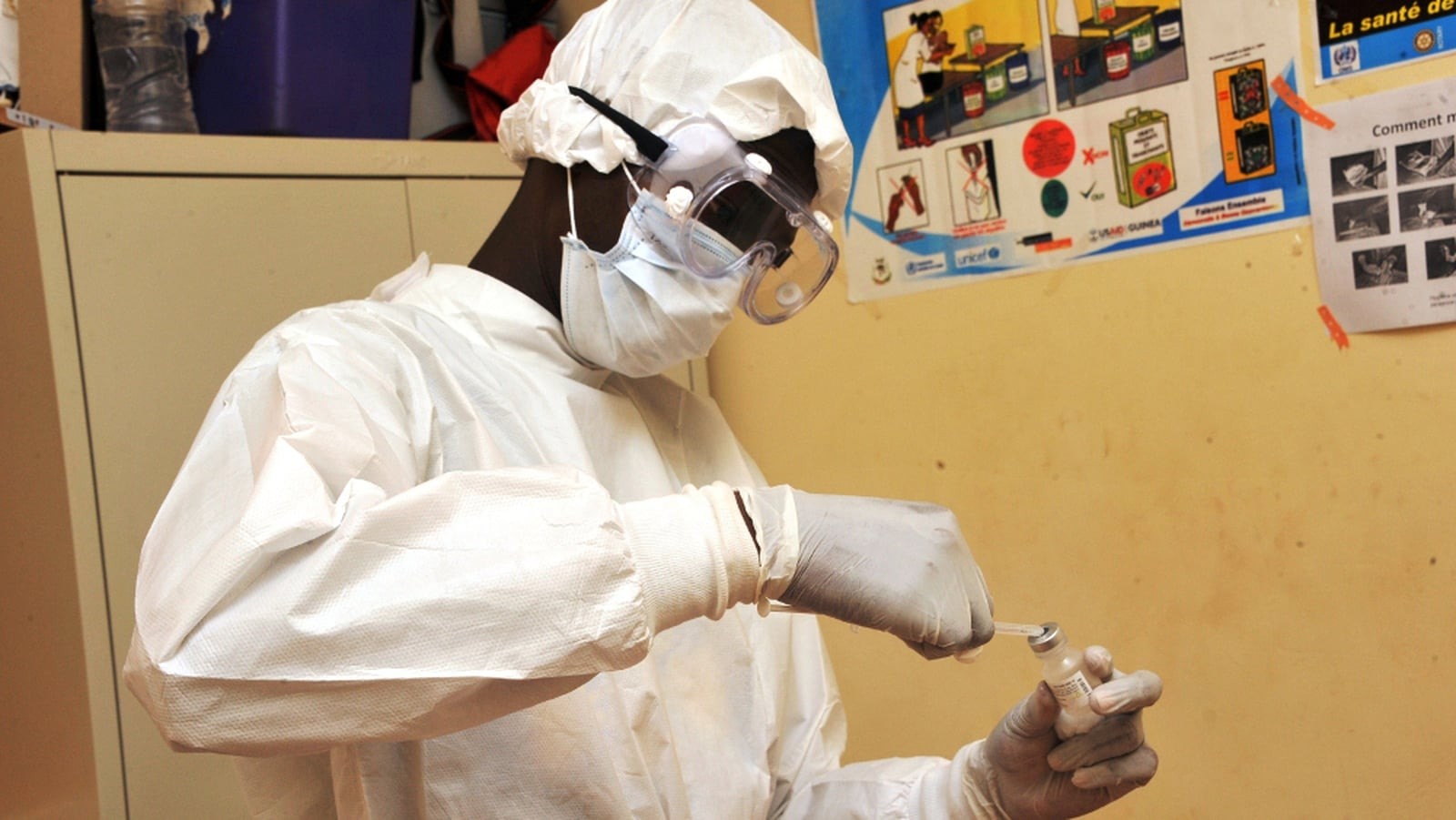
Africa's latest Ebola outbreak has passed 10,000 confirmed cases, with almost 5,000 deaths recorded since the virus first emerged in the Democratic Republic of Congo in May, according to RTE.ie.
The Congolese health authorities put the toll at 10,060 infections and 4,887 deaths, making this the deadliest outbreak in the country's history. Cases have also been confirmed in Kenya, Nigeria and Uganda, and the World Health Organization has warned that Africa faces a complex task containing an epidemic that now spans the east, west and centre of the continent.
Congo bears the brunt of the outbreak
The virus was first detected in the northeastern province of Ituri, the starting point of the DRC's 17th recorded outbreak of the disease. Since then it has spread across large parts of the country's north and east, regions where armed groups carry out near-constant violence and where trust in a distant, long-absent state is thin.
Ituri and neighbouring North Kivu, which is partially controlled by the Rwanda-backed M23 militia, account for the majority of reported cases.
According to the Congolese National Institute of Public Health, 2,684 people have recovered, while the epidemic's fatality rate stands at close to 50 percent. AFP reported the figures on Tuesday, noting that the vast majority of cases are concentrated in the DRC.
Why this outbreak is so hard to contain
One of the starkest problems facing responders is medical rather than logistical. There is no approved vaccine or treatment for the Bundibugyo species of Ebola driving this epidemic. Testing of the Ervebo vaccine, which has proven effective against the more common Zaire strain, began in recent weeks to see whether it might also protect against Bundibugyo.
The virus spread undetected for weeks before identification, giving it a head start that health services in a fragile state have struggled to claw back. Ebola is transmitted through contact with bodily fluids, which makes community trust as important as any drug or cold chain.
That trust is badly lacking in places. On Saturday, a nurse was killed and a health worker seriously wounded in the northeastern Tshopo province, according to the WHO.
Doctor Marcel Likolo, chief medical officer of the Bafwasende health district, told AP News that young people from the area accused the victims of trying to infect locals with tablets before attacking them. The Ebola treatment centre where the incident took place has since shut down.
For anyone who believes in strong public health systems, and in the duty of the state to be present in the lives of its citizens, the lesson is hard to miss. Where government has been absent for decades, rumour and violence rush in to fill the gap, and health workers pay the price with their lives.
Neighbouring countries on alert
Uganda, which registered 20 cases and two deaths, was declared Ebola-free by the WHO in late August. Kenya, which had reported no cases until 6 October, has since recorded nine infections and two deaths. Most of those infected had recently travelled to the DRC.
Nigeria has confirmed a single case, a 42-year-old Swiss woman who contracted the virus after a trip to Uganda with her husband and was evacuated back to a hospital in Geneva. Nigerian health authorities have identified 53 of her contacts in an effort to stop the virus spreading across Africa's most populous nation.
Some experts are worried the virus could have spread after the Swiss couple landed back in Nigeria on 3 October. The WHO said the woman, the wife of an employee of the Swiss embassy in the capital Abuja, developed symptoms on 7 October, sought care on 11 October and tested positive for Bundibugyo on 20 October. A Ugandan government spokesperson rejected the suggestion that she contracted the disease while in Uganda.
ABC News reported that authorities are racing to slow the spread across Africa, a race complicated by the outbreak's reach across three regions of the continent at once.
A continent-wide emergency demands a collective response
Since Ebola first emerged half a century ago, it has killed more than 15,000 people across Africa. Those deaths are not simply a matter of biology. They reflect underfunded health systems, weak state presence in remote regions, and a global vaccine market that has little commercial interest in a disease that mostly kills poor people.
The WHO's warning that containment will be complex is, if anything, an understatement. An outbreak that spans the east, west and centre of Africa, in the absence of an approved vaccine, demands coordinated international action, sustained funding, and above all investment in the communities where the virus circulates.
What happens next depends on whether that support arrives in time, and whether health workers in Ituri and North Kivu can do their work without fear of being killed for it.
FAQ
How many Ebola cases have been confirmed in Africa's latest outbreak?
The Congolese health authorities have confirmed 10,060 cases, with 4,887 deaths, since the virus was first detected in the DRC in May.
Which countries have recorded Ebola cases?
The vast majority of cases are in the Democratic Republic of Congo. Kenya, Nigeria and Uganda have also confirmed infections.
Is there a vaccine for the Bundibugyo Ebola strain?
No approved vaccine or treatment exists for the Bundibugyo species behind the outbreak, though testing of the Ervebo vaccine against the variant began in recent weeks.
What is the fatality rate of the current outbreak?
The Congolese National Institute of Public Health puts the fatality rate at close to 50 percent.