
As the clocks go back and the dark evenings settle in over the country, the Irish Independent has turned its attention to a question that matters in every household: what should we be eating to get through the winter without succumbing to every cold that comes through the door? The answer, according to the paper's interview with Tesco Foodie Dr. Aisling Farrell, is not a miracle supplement but something far more ordinary and far more achievable, a varied diet built on real food.
The piece, published on October 25, makes a point that public health bodies have been repeating for years: no single food, drink or pill will carry you through the winter. What counts is the overall pattern of what lands on the plate, week in and week out.
Why variety matters more than any single food
Dr. Farrell's central message is captured in a simple phrase she uses with her patients: eat the rainbow. Choosing different coloured fruit and vegetables, alongside wholegrains, beans, lentils, nuts and seeds, is the most reliable way to cover the full spread of nutrients the immune system needs to function normally.
It is not only about vitamin C, the nutrient everyone reaches for at the first sign of a sniffle. As she told the Irish Independent, the immune system relies on a whole range of inputs: protein supports the production of immune cells and antibodies, fibre feeds the beneficial bacteria in the gut, healthy fats provide energy, and vitamins A and D along with minerals such as zinc and iron each do their own work.
That last point deserves emphasis in an Irish context. Vitamin D is the one case where supplementation is not optional. The HSE recommends that Irish adults take a daily vitamin D supplement from October to March, because we simply cannot make enough of it from weak winter sunlight at this latitude.
The gut does quiet, essential work
Behind the scenes of every immune response sits the gut. Beneficial gut bacteria help the immune system work properly, and a healthy gut lining forms a physical barrier against harmful germs. Feed those bacteria well and they repay the favour.
The evidence backs this up. The British Heart Foundation notes that what you eat changes the mix of bacteria in your gut, and that diets rich in a variety of high-fibre plant foods, including fruit, vegetables, wholegrains, beans, nuts and seeds, help beneficial bacteria thrive because they feed on fibre. In other words, the humble carrot and the cheap tin of lentils are doing immunological work that no juice cleanse can replicate.
The case for variety is also made plainly by the US Office of Dietary Supplements, which states that consuming a nutritious variety of foods helps maintain overall good health and a strong immune system, and that deficiencies of vitamins and minerals, including vitamins A, B6, B12, C, D and E, can undermine immune function.
Eating enough is part of eating well
There is a quieter warning in the Irish Independent's piece, and it is one worth hearing in a country where food poverty is a real and growing concern. Eating less does not always mean eating more healthily, particularly when recovering from illness or injury.
Our immune system is complex and needs adequate energy and a range of nutrients to function properly, Dr. Farrell said. If we are not eating enough, we may fall short of what the body needs, and nutrient deficiencies can weaken the immune response.
This is where the social dimension of nutrition becomes impossible to ignore. Advice to eat a varied, balanced diet presumes access to that diet. For families stretched by rent, energy bills and grocery inflation, the practical question is not whether chicken noodle soup is good for you, but whether it is within reach. Good food should not be a luxury, and any honest conversation about public health has to include the cost of eating well.
Two recipes worth keeping
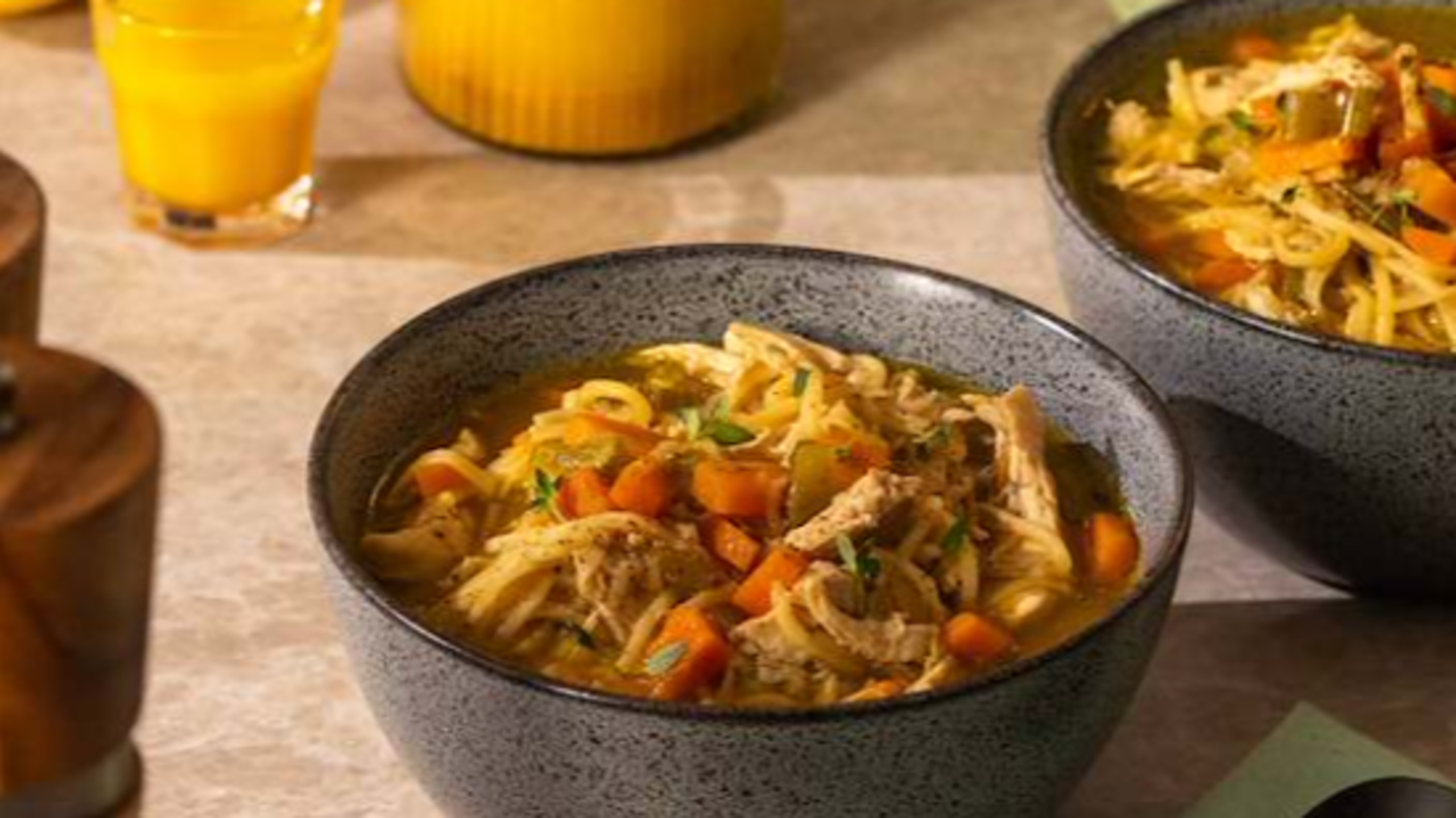
Dr. Farrell shared two practical recipes for the winter months. The first is a chicken noodle soup for four people, built on 4 chicken fillets, olive oil, an onion, 2 carrots, 2 celery sticks, 2 garlic cloves, a litre of chicken stock, fresh thyme, salt and pepper, and 100g of egg noodles.
The method is straightforward. Soften the onion, carrots and celery in olive oil for 5 to 6 minutes, add garlic for another minute, then pour in the stock with thyme and black pepper and bring to a gentle simmer. Add the whole chicken fillets, cover, and simmer for 15 to 20 minutes until fully cooked. Remove the chicken, shred it with two forks, return it to the pot with the noodles and simmer for 4 to 6 minutes until tender. Season, then serve with chopped parsley and a squeeze of lemon.
She said soup can be a very nutritious option during winter, providing protein, fibre and vitamins in a single bowl.
The second recipe is a ginger, turmeric and orange shot, making around eight portions. Blend 100g of peeled fresh ginger with 2 tablespoons of dried turmeric, the juice of 2 lemons and 1 orange, a tablespoon of honey, half a teaspoon of ground black pepper and 250ml of cold water. Strain through a fine sieve, pour into small bottles and refrigerate for up to four days, shaking before drinking. As she noted, shots like these are a handy way to increase vitamin C intake, though they are a supplement to a good diet rather than a substitute for one.
Wellness is a year-round project
Dr. Farrell's closing advice may be the most useful of all. If you want to be well in winter, aim to be well all year round. Food is one part of supporting immune health, and adequate sleep, avoiding smoking, managing stress and regular physical activity all matter too. The most helpful approach is to build sustainable habits throughout the year rather than lean on a particular food or supplement when the cold arrives.
That is a modest, sensible prescription, and it is one that belongs to everyone, not just those who can afford the wellness aisle. The best defence against winter begins on the dinner plate, and it begins long before the first frost.
FAQ
Can food really boost your immune system?
No single food boosts immunity on its own. A varied, balanced diet supports normal immune function by providing the full range of nutrients the body needs, according to Dr. Aisling Farrell and public health bodies.
Should Irish adults take vitamin D in winter?
Yes. The HSE recommends a daily vitamin D supplement from October to March, because winter sunlight in Ireland is too weak for the body to produce enough of it naturally.
What does eating the rainbow mean?
It means choosing many different coloured fruit and vegetables, alongside wholegrains, beans, lentils, nuts and seeds, so that no single nutrient group is missing from the diet.