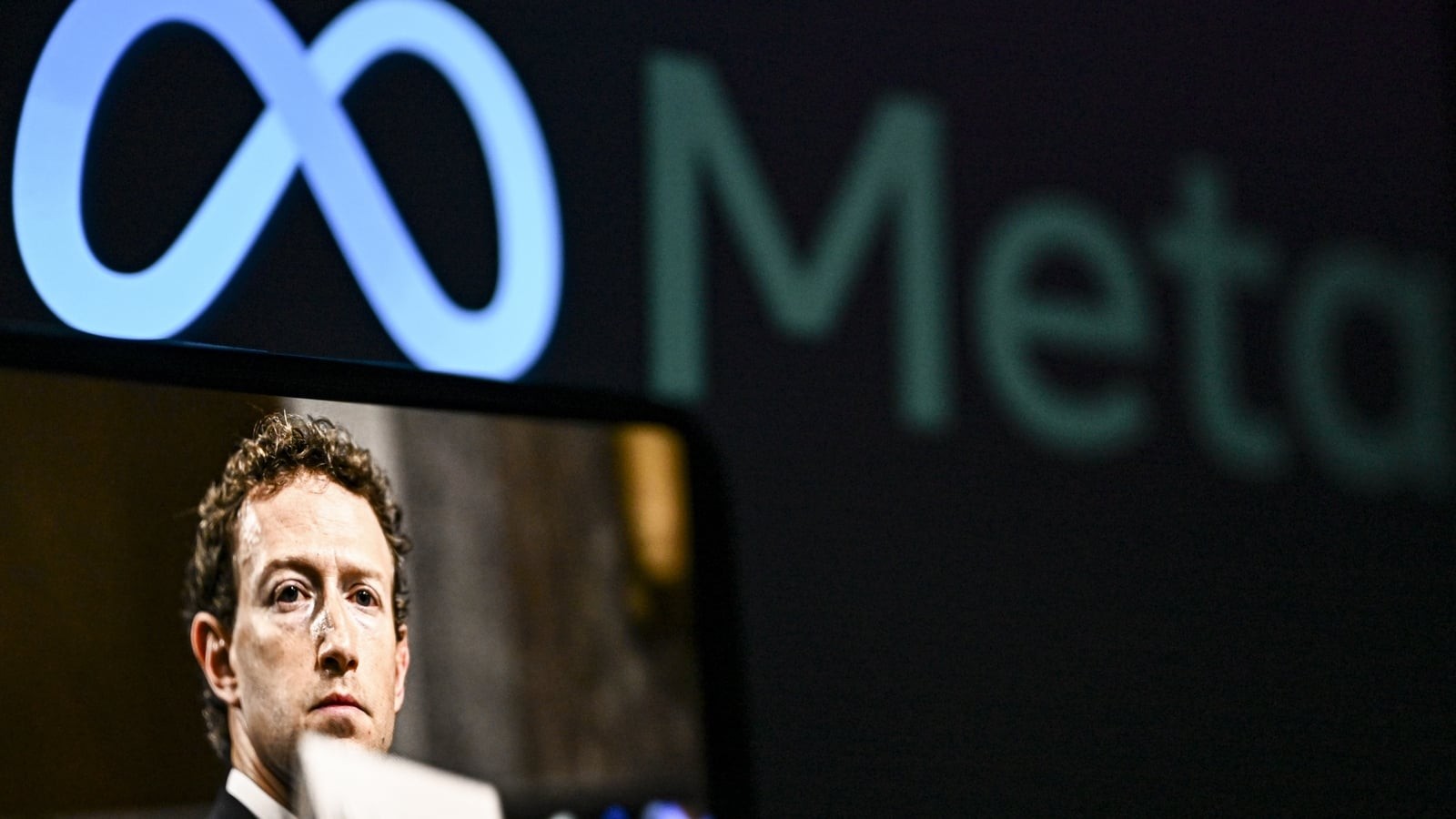
Meta reported better than expected third-quarter revenue on Wednesday night, but its profits fell by almost half after an $18 billion legal settlement with nearly all US states dragged down the company's bottom line.
The social media giant posted $9.86 billion in profits for July to September, roughly 50% below what investors had anticipated. Meta said a $9.9 billion charge tied to the state settlement was the main cause, according to RTE.ie. The figures landed just hours after a judge in New Mexico ordered the company to pay a further $25 billion, after a jury found last month that Meta had deceived users in a case connected to the Cambridge Analytica scandal.
Legal bills keep piling up for Zuckerberg's company
The two penalties together mark one of the heaviest financial reckonings any technology firm has faced over its treatment of users' data and its platforms' effects on young people. The Los Angeles Times reported that legal expenses tied to the August agreement over young people's mental health came to roughly $10 billion in the quarter, alongside revenue of $64 billion that beat Wall Street's expectations.
Chief Financial Officer Susan Li told analysts on a call that the company's legal troubles are far from over.
“We continue to monitor active legal and regulatory matters that could significantly impact our business and financial results,” Li said.
She added that Meta still faces “a number of youth-related trials scheduled in the coming months in the US.” For a company that has long presented itself as a connector of communities, the sight of courts across America lining up to fine it for harming those very communities tells its own story about where unaccountable power leads.
How does Meta answer? With more AI spending
Rather than retrench, Meta is pressing ahead with an aggressive artificial intelligence build-out. The company spent $35 billion on capital expenditures in the September quarter, below the $41 billion investors had expected, and has spent more than $85 billion so far this year, according to its own investor documents.
In July, Meta raised its full-year spending estimate to $145 billion, up from $130 billion, nearly double what it spent in 2025. That money is going into the data centres that AI models demand, an industry-wide race that is reshaping energy grids and local economies far beyond Silicon Valley.
Chief Executive Mark Zuckerberg told analysts that the company's hardware arm, Reality Labs, is on a path to improvement.
“We expect that the profits and losses of Reality Labs to improve from here, and trending towards profitability,” Zuckerberg said.
Smart glasses and the Muse model
Reality Labs is developing devices such as AI-powered glasses. In September, at the company's annual Meta Connect conference, Meta unveiled several new AI wearables, including an audio-only, camera-free version of its smart glasses. That design choice came amid global concerns about privacy and the filming of women and girls without their consent, a worry that regulators in Europe have shared for some time.
Zuckerberg said in September that the company's AI model, known as Muse, will be “the centrepiece of our vision” for wearables. The glasses let wearers take photos, film videos, listen to music, make calls, translate text or interact with an AI assistant. Meta also announced the Muse Charm, a tamagotchi-like device that lets users interact with their Muse agent away from a smartphone.
“We're about to ship Muse Charm, which will have gone from concept to a hardware device in people's pockets in less than a year,” Zuckerberg said on the call.
Meta said 10 million people already use the Muse model in the US and Canada. The Manila Times noted that the company's AI push is central to its strategy even as the legal costs mount, a tension investors are watching closely.
A new share class to protect one man's grip
Meta also announced it will issue a new class of stock without voting rights, allowing it to raise money for its AI roadmap. But there is a more personal motive in the filing. Meta expressed concern that Zuckerberg's voting power “could drop to approximately 53% or lower” if he has to sell a significant portion of his shares to pay increased taxes.
The worry stems from Proposition 40, a billionaire wealth tax that California voters could pass this November. Existing shareholders will receive one new Class C share for each share they own, meaning Zuckerberg gains shares he could sell to cover the tax bill without diluting his control of the company he founded.
The arrangement is a neat trick for a billionaire, and a reminder of how differently the rules work at the top than for everyone else. While ordinary taxpayers face their bills without the option of conjuring new shares, the architecture of corporate power bends to protect itself. It is exactly the kind of arrangement that fuels the argument, heard on this side of the Atlantic too, that concentrated private power needs strong democratic oversight rather than the gentle touch it has too often enjoyed.
What happens next for Meta?
The coming months will test whether the fines change anything. More youth-related trials are scheduled in the US, and European regulators continue to examine the company's data practices. In the meantime, Meta will keep spending on AI at a pace few companies can match, betting that the courts move slower than the technology.
FAQ
Why did Meta's profits fall by nearly 50%?
Meta took a $9.9 billion charge in the third quarter related to an $18 billion legal settlement with nearly all US states, cutting profits to $9.86 billion, almost 50% below expectations.
What was the New Mexico ruling against Meta?
A judge ruled on Wednesday that Meta must pay $25 billion to New Mexico after a jury found in September that the company deceived users in a case linked to the Cambridge Analytica scandal.
How much is Meta spending on AI this year?
Meta expects capital expenditures of about $145 billion for the full year, up from an earlier estimate of $130 billion and nearly double its 2025 spending.