
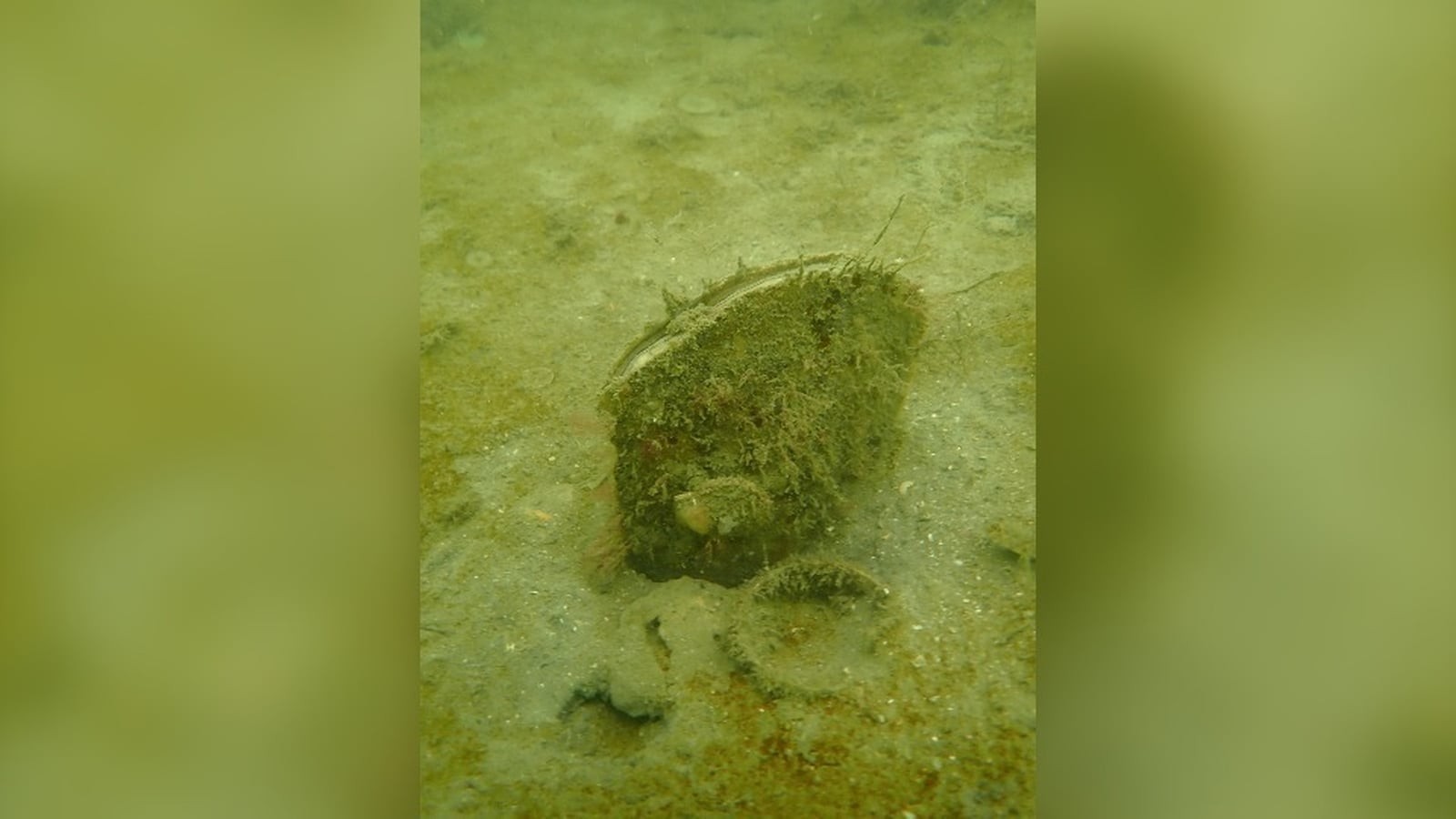
A critically endangered giant fan mussel has been discovered on the seabed near Valentia Island in Co Kerry, the first confirmed live sighting of the species in Irish waters in almost 20 years.
Divers from Sea Synergy Marine Awareness, Research and Activity Centre and the environmental coalition Fair Seas found the mollusc on 17 October 2026 while surveying native European flat oysters in the Portmagee Channel Special Area of Conservation, according to RTE.ie. The last live sighting in Irish waters was off Rathlin Island in Northern Ireland in 2007, with an earlier one recorded there in 1971.
What is the fan mussel and why does this discovery matter?
The fan mussel, known scientifically as Atrina fragilis, is one of the largest and rarest bivalve molluscs in Europe. It is listed as critically endangered. The Kerry specimen measures an estimated 25 centimetres wide by 20 centimetres tall on visual examination, with another two-thirds of its body buried in the silt. The divers left it undisturbed on the seabed.
Only shells had previously washed ashore in Cork harbour and in Daingean Uí Chuis in west Kerry, offering no proof that the animal still lived in these waters. A century ago the species was far more common. Victorian shell-collectors prized it, and its silky threads, known as byssus, were once spun into expensive gloves and stockings.
Elis Martinelli, Marine Programme and Operations Manager with Sea Synergy, said the find is extremely significant.
We know very little about this mussel. They live in soft sediment with up to two-thirds of their shell buried, they're estimated to live from anywhere between 10 and 100 years. They were far more common more than a century ago but they are fragile creatures, vulnerable to trawling, dredging and pollution, and have become incredibly rare.
A community project that grew from one oyster
The discovery came out of the Sea Synergy Oyster Project, which began after local fisherman Brendan Murphy found an exceptionally large native oyster in the Portmagee Channel in 2020. The project, developed with Portmagee Tidy Towns, has since recorded 1,605 living native oysters through scientific research and extensive shoreline and snorkelling surveys, and has mapped their distribution throughout the channel.
In 2026 the project entered a new phase, expanding into deeper waters through SCUBA-based biodiversity and oyster surveys carried out with Inbhear Sceine Kerry Sub Aqua Club. It has been supported by the Heritage Council, the National Parks and Wildlife Service, and Fair Seas.
Jack O'Donovan Trá, a marine biologist and communications officer with Fair Seas, took part in the dive. He said finding the fan mussel so close to the Kerry coast was extraordinary, and he pointed to a gap in official monitoring.
On-the-ground projects such as those being run by Sea Synergy and partners are vital because of the lack of detailed marine habitat surveys by government agencies.
He added that supporting such projects is a direct route to a deeper understanding of Ireland's native and threatened ecosystems.
It also highlights why we need management plans and dedicated surveys of Ireland's protected sites to ensure these ecosystems can recover and thrive.
A call for marine protected areas legislation
Fair Seas is a coalition of leading environmental non-governmental organisations and networks, including the Irish Wildlife Trust, BirdWatch Ireland, the Sustainable Water Network, the Irish Whale and Dolphin Group, Streamscapes, the Irish Environmental Network and Coastwatch. It is campaigning for strong and ambitious marine protected areas legislation committing Ireland to effectively protecting 30% of the seas around the island by 2030, with 10% strictly protected.
The fan mussel's story is a plain lesson in what happens when the sea is treated as a resource to be dredged first and understood later. Trawling, dredging and pollution pushed a once-common animal to the edge of disappearance in these waters, and only a handful of volunteers and scientists in small boats went looking to see what remained. Their reward was an animal that no official survey had found alive on this island's south coast in living memory.
That a creature this rare survived in the Portmagee Channel is good fortune. That its survival was documented by a community project rather than a state survey says something about where the work still falls short. Special Areas of Conservation exist on paper; without management plans and dedicated surveys, as Fair Seas argues, they cannot guarantee recovery for species like this one.
The next step sits with government. The Marine Protected Areas Bill, long promised, would give legal force to the 30-by-30 commitment. Until it passes, the fan mussel off Valentia Island remains what it has been for a century: a rare survivor, waiting to be protected.
Frequently asked questions
What is a fan mussel?
The fan mussel, or Atrina fragilis, is one of the largest and rarest bivalve molluscs in Europe. It lives buried in soft seabed sediment and is critically endangered.
Where was the fan mussel discovered?
It was found on the seabed near Valentia Island in Co Kerry, in the Portmagee Channel Special Area of Conservation, by divers from Sea Synergy and Fair Seas.
When was a fan mussel last seen alive in Irish waters?
The previous live sighting was off Rathlin Island in Northern Ireland in 2007, with an earlier sighting in the same waters in 1971.
Why are fan mussels endangered?
According to Sea Synergy's Elis Martinelli, fan mussels are fragile and vulnerable to bottom trawling, dredging and pollution, which drove a once-common species to extreme rarity over the past century.