
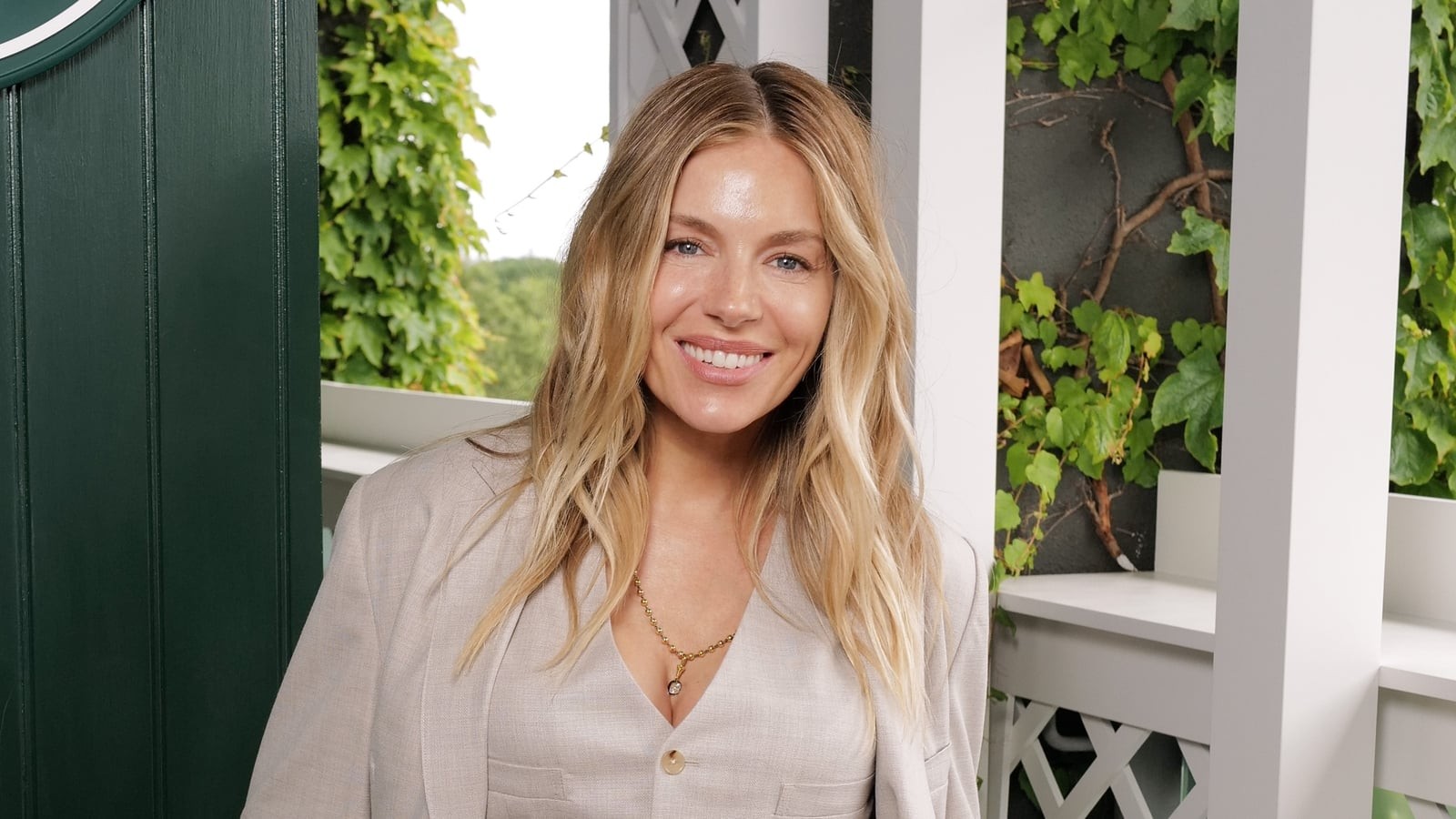
In a world that often demands bold statements, there is something quietly radical about choosing subtlety. The French have long understood this, and their latest gift to the world of hair is no exception. French highlights, a colour trend that whispers rather than shouts, are becoming the defining look of this summer. They are not about transformation but about enhancement, a philosophy that resonates deeply with our own values of authenticity and natural beauty.
Unlike the stark, attention-grabbing streaks of the past, French highlights are designed to be barely detectable. They work with your natural tone, adding texture and dimension without the harsh lines of traditional colouring. As celebrity hairstylist Adam Reed puts it, they are about 'subtle dimensional colour, delicate light reflection and beautifully blended tones that grow out effortlessly.' It is a approach that feels both modern and grounded, a quiet rebellion against the disposable trends of fast fashion.
Siobhan Haug, co-founder of Haug London Haus and a former British Colour Technician of the Year, believes the trend is driven by the weather. 'We've seen a rise in clients looking for dimensional tonality in their hair,' she says. 'The summer is the time to do that, because we have the maximum light on our hair, so you really want to see that tonal reflection rather than a solid block of colour.' It is a reminder that beauty, at its best, is a conversation with the world around us.
What Are French Highlights?
Reed describes French highlights as a 'super natural' version of your own hair colour. 'It's a much more personal approach to colouring as it's all about enhancing the client's natural colour rather than a total change,' he explains. Haug adds that it is a 'natural, tonal and nuanced colour' achieved through a combination of foliage and under-lighting techniques.
Foliage involves lifting baby highlights or woven teasy highlights on very fine strands of hair closer to the root. After that, Haug goes back through underneath the lighter shades to add natural dimension. 'It's the combination of both that creates the French highlights' multi-dimensional effect,' she says. The key distinction from balayage is that the colour is applied further up the hair, creating a brighter, more voluminous effect.
What Hair Types Suit French Highlights?
The good news is that French highlights are a 'universal colour style,' according to Haug. 'It works across all hair textures, but what needs to be altered is the width of the texture put into the hair,' she says. For thick or curly hair, bolder slices are needed to prevent the colour from getting lost. For very straight hair, intricately placed babylights create a softer blend. Haug has applied French highlights to every hair colour, from red to grey, adding: 'No hair should just be one colour. French highlights are all about putting that natural nuance back into hair, whatever the colour.'
What Should You Ask Your Hairdresser?
Reed encourages clients to talk less about the technique and more about the results. For French highlights, he says the goal is 'soft, seamless brightness, natural dimension and colour that grows out beautifully.' He also strongly advises bringing inspiration pictures that 'show the feeling rather than just the colour itself.' Celebrities like Jennifer Aniston, Léa Seydoux, Sienna Miller, Cat Deeley and Sarah Jessica Parker are excellent references for this look.
How Can You Maintain French Highlights at Home?
For Haug, the number-one rule is to keep brassy tones at bay. Blondes should use a purple shampoo no more than once a week, and it should always be the second shampoo. 'That's because you should cleanse the hair first, then follow with a purple shampoo to get the full neutralising power,' she explains. For brunettes, redheads, or any other colour, a colour mask every second week can restore richness.
Haug also suggests investing in a UV protector spray. 'UV rays are the biggest threat to a detailed and delicate colour like French highlights as they make it fade. A UV protector is a bit like sun cream for your hair,' she says. Those with porous and damaged hair should consider a porosity equaliser, which fills in the little holes in the hair shaft and stops the colour escaping.
Reed adds that those with French highlights should avoid overheating their hair as it 'tends to reduce the colour.' Otherwise, he recommends a 'simplistic' routine involving a shampoo and conditioner designed for coloured hair, along with a regular hair mask treatment.
How Long Do French Highlights Last?
French highlights are relatively low-maintenance compared to more intense colour work, such as bleach blonde. Reed recommends booking a French highlights appointment two to three times a year and visiting the salon roughly every three months for toner top-ups to maintain results. It is a commitment to care, not to constant change.