
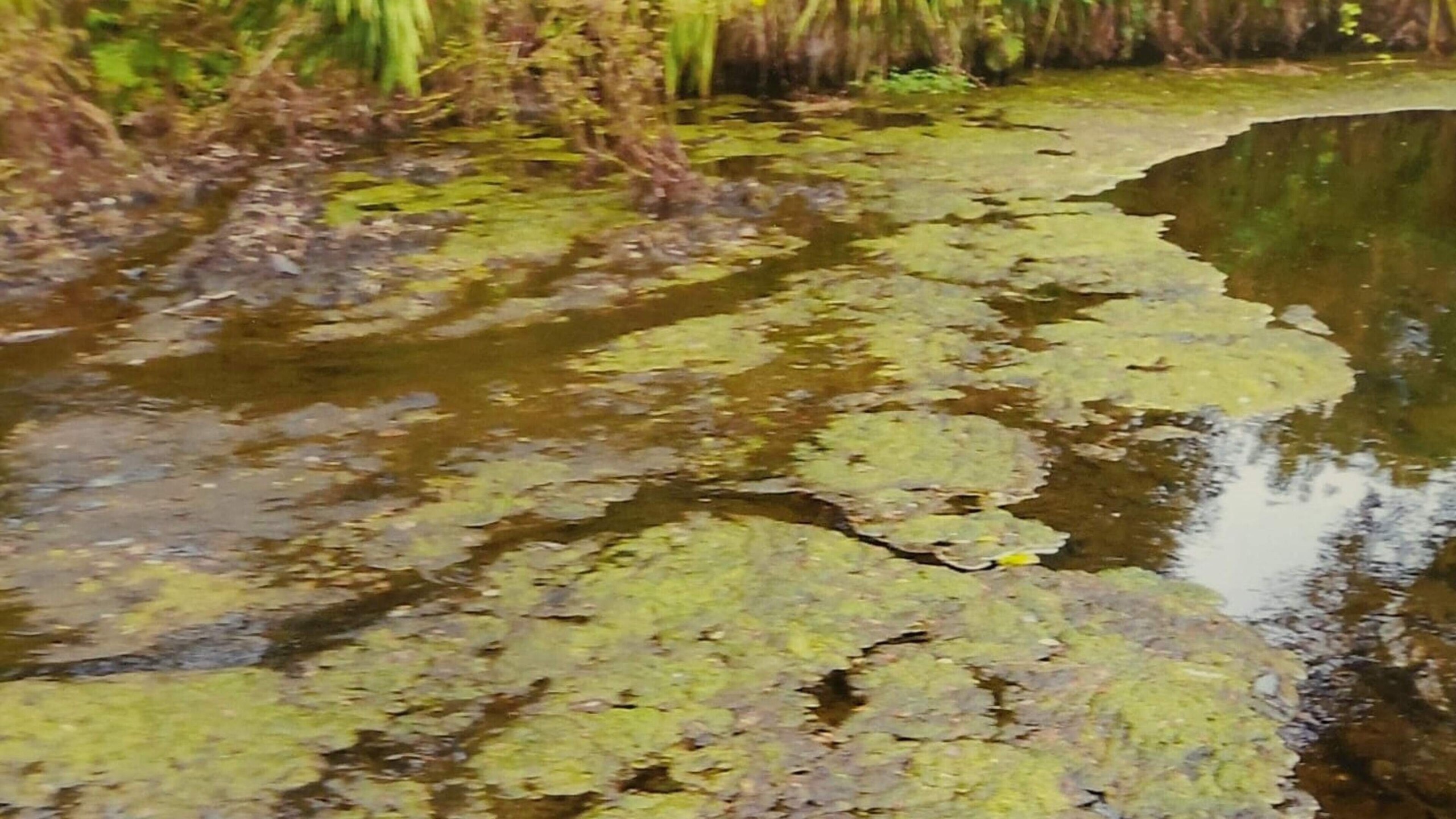
A 77-year-old man from north Kerry has documented severe eutrophication in the River Feale and its tributary the Breanagh, only to be told by the Environmental Protection Agency that the problem is not its responsibility. Brendan Danaher made the discoveries last month while walking the riverbank near Striolán Bridge, where Kerry, Cork and Limerick meet, according to a report in the Irish Independent.
What he found, in a stretch of water long regarded as one of Ireland's finest spawning grounds for wild Atlantic salmon and sea trout, has alarmed local anglers and raised serious questions about who is actually minding our rivers.
What Brendan Danaher found in the Feale and the Breanagh
It began as a casual meeting with an ecologist at the banks of the Feale. The two men noticed nutrient-loving aquatic weeds thriving in the basin below Striolán Bridge. Water samples they took showed elevated levels of phosphorus, a classic signature of agricultural runoff, untreated sewage, or wastewater carrying phosphates.
On the Breanagh, a tributary of the Feale, the picture was worse.
“I went into the fields and moved up river, maybe by 50 meters, and Jesus, there was a sheet of this on top of the river,” Danaher said.
“And right under my feet I couldn't see the gravel… there was huge disappointment from both of us.”
When he got home and showed his photographs to a friend who works as an environmental scientist, the verdict was blunt.
“He said 'Brendan, you're looking into a dead river here. That is really serious.'”
Why eutrophication kills a salmon river
Eutrophication happens when a body of water becomes overloaded with nutrients, most often phosphorus and nitrogen. Algae bloom in response, and when that algae dies and decays, oxygen in the water collapses. Fish and other aquatic life suffocate. In severe cases, the result is a mass die-off like the fish kill on the Blackwater last year.
The Feale is not just any river. It is a designated salmonid fishery, supposedly protected under the EU Habitats Directive and Special Areas of Conservation legislation. The clean gravel beds of its upper stretches are exactly what female salmon need to bury their eggs, and what the young fry need once they hatch.
“Sadly what I found in the upper stretches of the Feale during the past number of weeks leads me to conclude that juvenile salmonids would not survive in the habitat,” Danaher said.
He noted that the river flows past several wastewater treatment plants and supplies water to the treatment plant serving Abbeyfeale and Listowel. He also pointed to the proximity of the Rockchapel Wastewater Treatment Plant to the affected stretches. Thousands of people drink this water, he reminded us, and they deserve better.
The EPA says it is not their problem
Danaher reported his findings to the EPA and asked it to carry out its own inspection. The regulator agreed that his photographs and description did suggest eutrophication in the river. But it then concluded the evidence did not indicate that any EPA-licensed activity was a contributory factor, and directed him to raise the matter with the “relevant local authority.”
That response sits uneasily with the agency's own stated purpose, which is to “protect, improve and restore our environment through regulation, scientific knowledge and working with others.” In later correspondence, the EPA added it would review any local authority investigation to check whether that authority had met its statutory obligations.
“I find it astonishing that it's this 77-year-old man who is finding and highlighting these problems, when there is a myriad of government agencies who are supposed to be protecting this river,” Danaher said.
“I've no idea why it was put back to me to get to the bottom of this problem.”
A pattern of wastewater failures across Munster
The Feale is not an isolated case. In Cork, contractors working for Uisce Éireann were found responsible for a five-month sewage spill into a river near the Glanmire greenway, with raw human waste flushing through an overflow pipe from August onwards, according to the Irish Examiner. The same episode was reported in detail by Echolive, which obtained documents showing a field engineer halted the pumps the day after walkers alerted authorities.
In West Cork, an EPA report into Clonakilty's wastewater system found improvement works had been carried out but monitoring is still under way to judge whether they work, as The Southern Star reported. A local councillor said the findings came as no surprise.
Piece these together and a picture forms: the State's water regulator licenses the big facilities, the local authorities police the small ones, Uisce Éireann runs the plants, and when something goes wrong in a river, everyone can point at someone else. The one person who cannot pass the buck is the citizen standing on the bank with a camera.
Can the salmon stocks still recover?
There is a sliver of hope. A report from Salmon Watch Ireland this year found fish numbers had improved 59 percent in 2025 compared with 2021. But the watchdog was careful about the cause: a catch-and-release rule has been in place since 2019, and it credited that measure above all else for the recovery.
Stopping anglers from taking fish helps only if the fish have somewhere to spawn. Danaher remembers a time, not so long ago, when the upper Feale ran clean over bare gravel with no algae at all. That habitat is the foundation of everything else, and it is the habitat that is now failing.
“If wild Atlantic Salmon are to survive in this once famous river then the myriad of agencies with responsibility for protecting this iconic species need to dial down the PR spin and meet their statutory obligations,” he said.
He also rejected the comfortable explanation that climate change alone is to blame for the sharp decline in sea trout entering the fishery in recent years.
“It's not today or yesterday I have raised the issue of water quality on the Feale and its tributaries but my legitimate concerns have been ignored by those whose statutory responsibilities are to protect the wonderful natural resources,” he said.
The EPA was contacted for comment by the Irish Independent.
FAQ
What is eutrophication?
Eutrophication is the over-enrichment of a body of water with nutrients, typically phosphorus and nitrogen, which triggers algae blooms. When the algae die and decay, oxygen levels collapse and fish and other aquatic life can suffocate.
Why is the River Feale important for salmon?
The upper Feale and the Breanagh form a prime spawning ground for wild Atlantic salmon and sea trout. The river's clean gravel beds allow female salmon to bury their eggs, and the newly hatched fry depend on that high-quality habitat to survive.
What did the EPA say about the pollution?
The EPA acknowledged that Brendan Danaher's photographs and description suggested eutrophication, but concluded the evidence did not point to any EPA-licensed activity and directed him to the relevant local authority. The agency said it would review any local authority investigation.
What causes river eutrophication in Ireland?
The main causes are agricultural runoff from fertilisers, untreated sewage, and wastewater containing phosphates. The Feale flows past several wastewater treatment plants, and Danaher noted the Rockchapel plant sits close to the affected stretches.